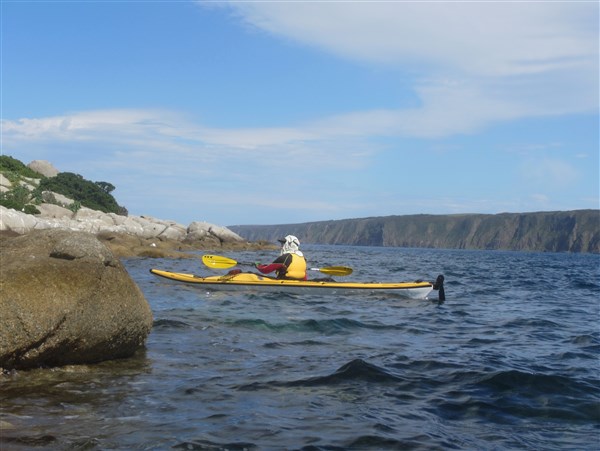
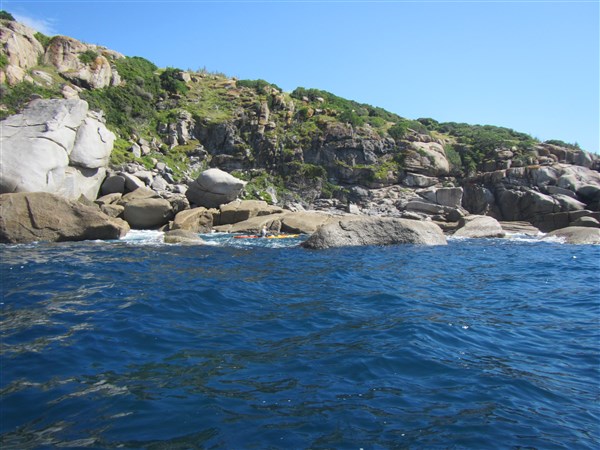
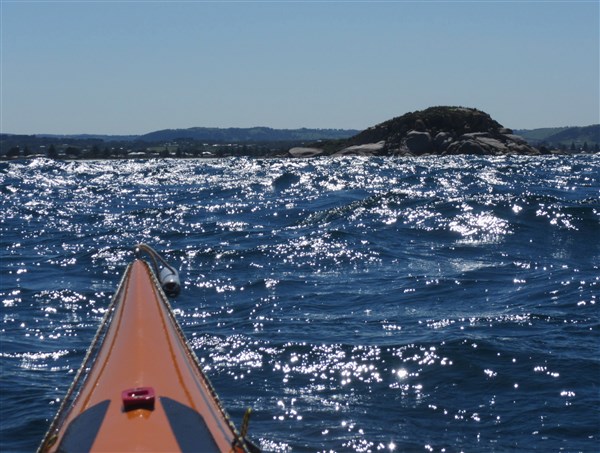
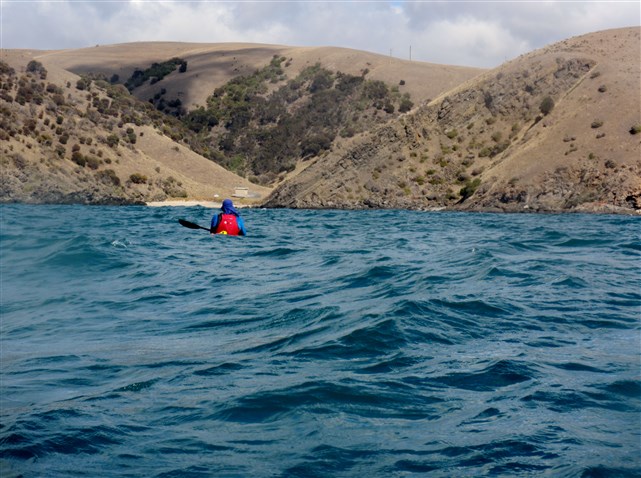
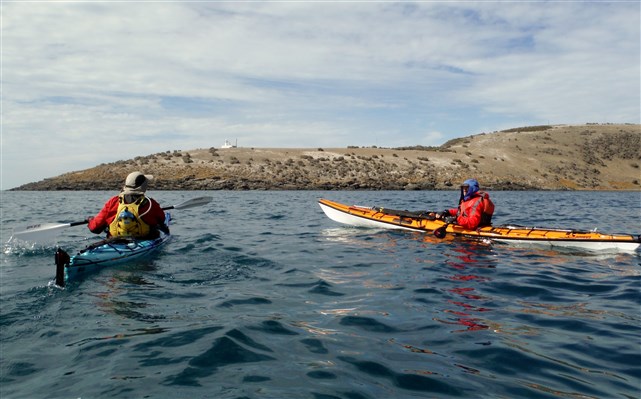
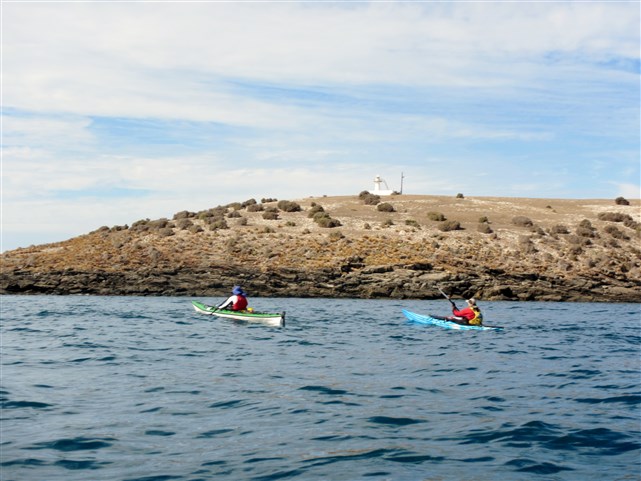
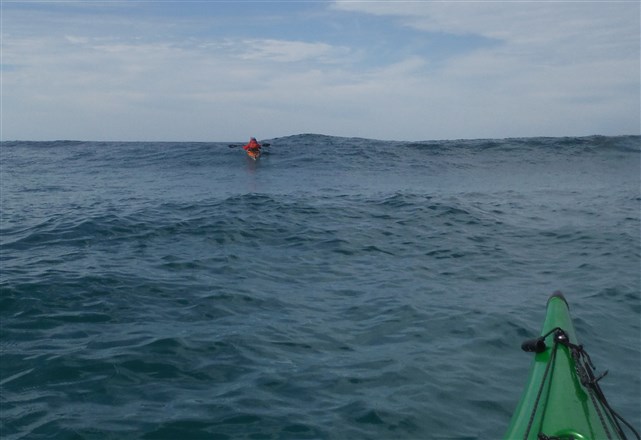
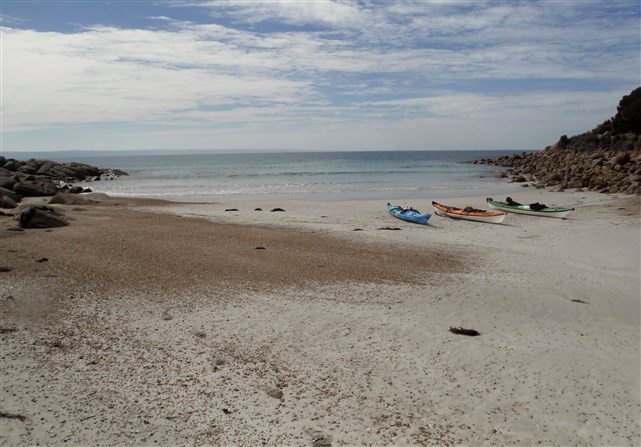
The Blowhole

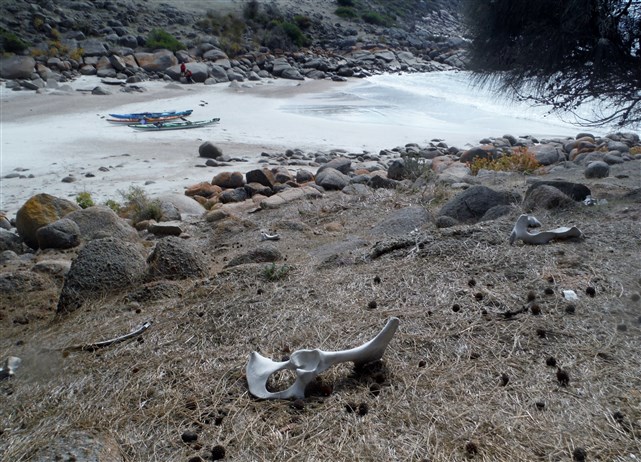
Sea kayak Day Paddle – Cape Jervis to Blowhole Beach.  Actually there isn’t really a blowhole there, not like the type we normally think of where towering waves crash onto a rocky coastline sending plumes of spray skywards. This is Blowhole Creek  in the Deep Creek National Park and one of the picturesque beaches along this very rugged coastline. I have been visiting this beach for the last 40 years and the only thing that has changes is that you can now access it via a 4WD track from within the National Park. In the old days it was a rocky walk down a rough track or straight down the fence line on Cobblers Hill.

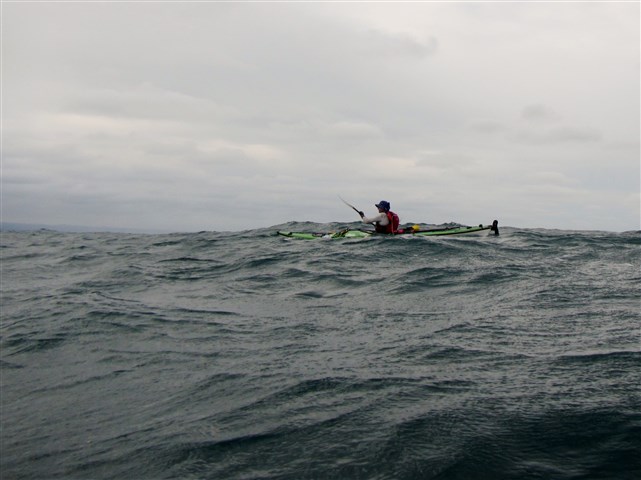
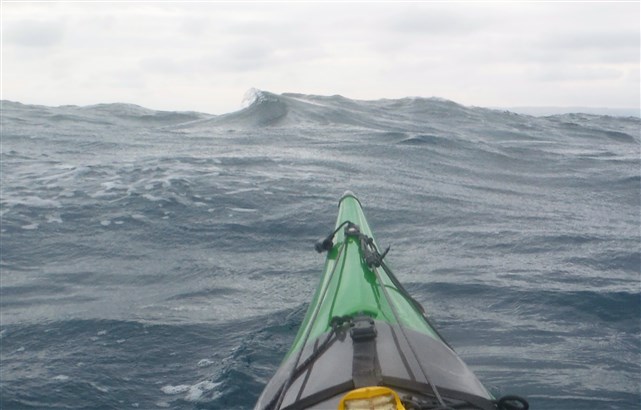
This area has a tidal stream of up to 3 knots as water empties and refills the Gulf St Vincent so all paddling needs to be planned with the tides.  My many years experience paddling this coast have also taught me to be very cautious of forecasts and take more notice of the conditions at the time as well my own observations.

The weather forecast a couple of days out had been for smooth seas and light winds so we planned a trip along the coast from Cape Jervis to Blowhole Creek and return. We gathered 5 local paddlers together with the idea of exploring the rocky coastline up close, if the weather forecast was correct.

The "5 fine young men" ready for action

The 5 “fine young men” ready for action

Arriving at Cape Jervis we found that the Backstairs Passage between the mainland and Kangaroo Island was just starting to have white caps on the horizon, stirred up by a Sou’Easterly breeze. Great….another day of headwinds and certainly not what we had hoped for but inshore it would be much calmer.

We got organised and waited in the shelter of the marina for the Kangaroo Island ferry to leave.
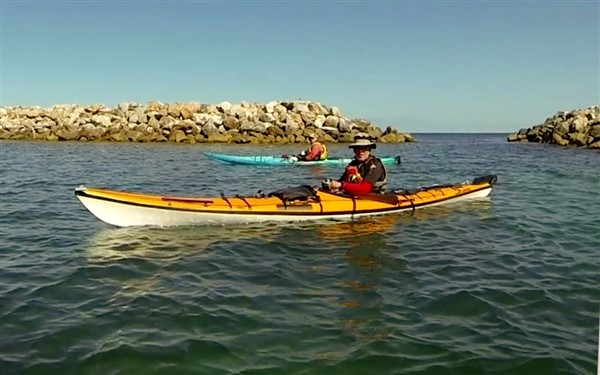
Waiting for the KI ferry to leave

Waiting for the KI ferry to leave

Then we plodded off into the increasing gusts.
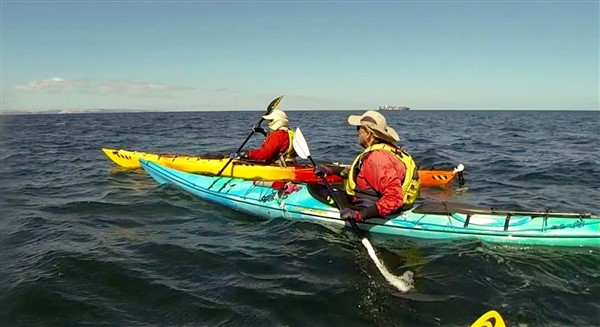
Michael and Steve

Michael and Steve

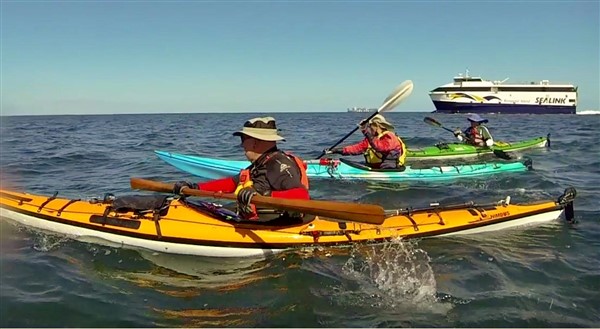
Of course there is a shipping lane in Backstairs Passage so you need to keep a wary eye on the horizon.
The Ferry and Container ship crossing paths

The Ferry and Container ship crossing paths

Sean and Michael in the protected waters
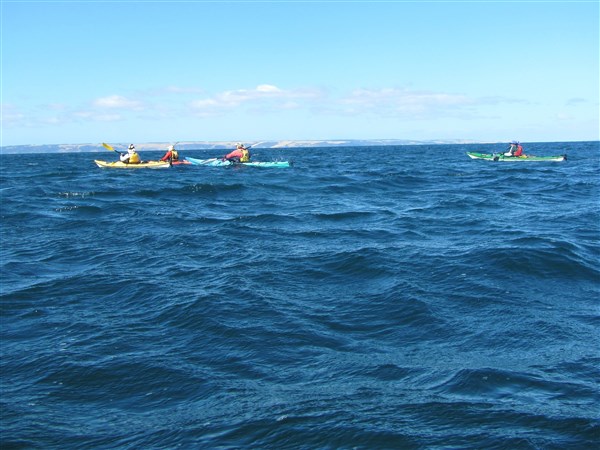
Sean and Michael in the protected waters

Heading out of the protection of Cape Jervis. Kangaroo Island in the distance.

Heading out of the protection of Cape Jervis. Kangaroo Island in the distance.

Looking at my GPS I thought “ Hey this was supposed to be an easy paddle riding the ebb tide, but we are only making 5km/hr in the strengthening wind. We decided to stay close inshore and use the headlands for protection from the breeze.

Paddling close inshore to avoid the winds.

Ian showing the way.

We reached Lands End and passed close in at Whites Beach where the underwater power cable goes to Kangaroo Island.

Staying in close

Staying in close

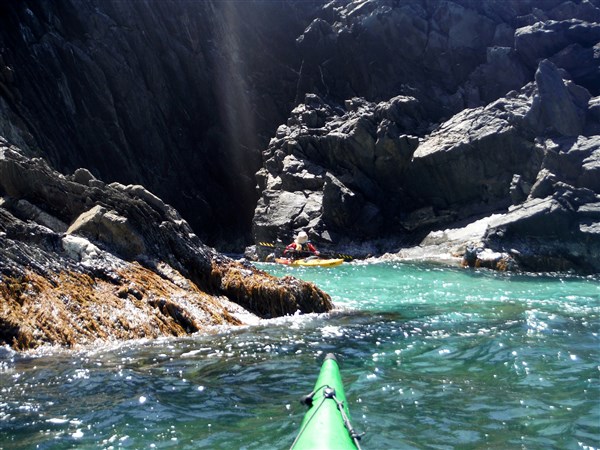
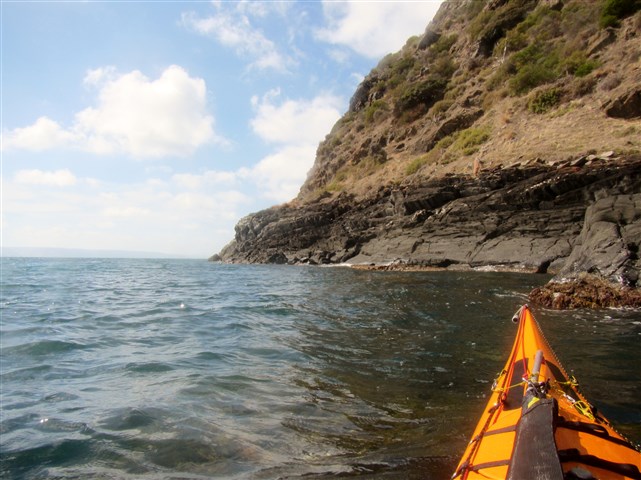
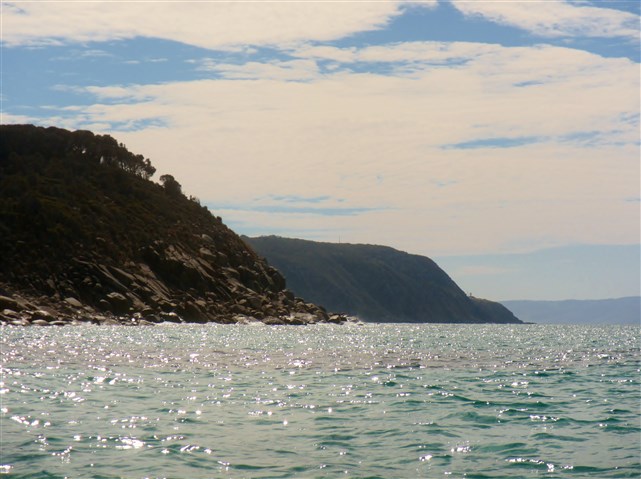
We soon arrived at the more interesting section of the paddle, where the steep cliffs fall straight into the water.

Clear water and shelter from the wind

Clear water and shelter from the wind

This allowed us to get up close and personal with the rocks and swell. As usual Steve was found bobbing around among the rocks.

Steve inspects another crevice

Steve inspects another crevice

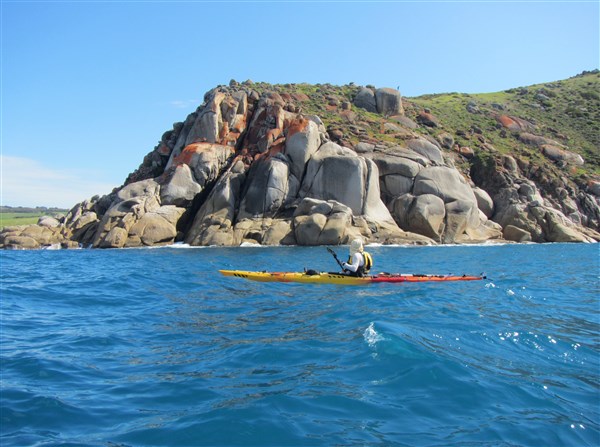
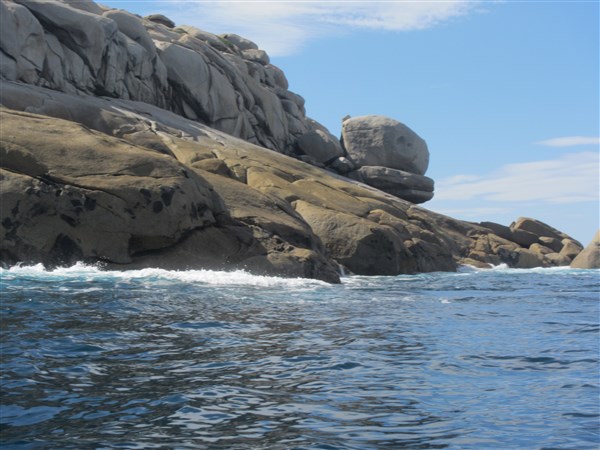
Rugged coastline

Rugged coastline

Inspecting the rocky coastline

Inspecting the rocky coastline

We “played” our way along the coast to Naiko inlet which is a small inlet with sandy beach. There we spotted the first signs of life for the trip. Maybe Alien life was a better description as we spotted a spaceship landed among the native bush.

Signs of life on the hill

Signs of life on the hill

A closer view of the landing spot

A closer view of the landing spot

Soon Cobblers Hill was in sight with Blowhole Beach just around the headland. We could see bushwalkers on the Heysen Trail which runs 1200 km from Victor Harbor to Parachilna Gorge in the northern Flinders Ranges.

One more headland to go

One more headland to go

A landing through small surf got us onto the pristine beach for lunch.

Blowhole Beach

Blowhole Beach

Rodney surprised with a bowl of fresh strawberries, cherries and grapes to share. Who said he’s disorganised ??
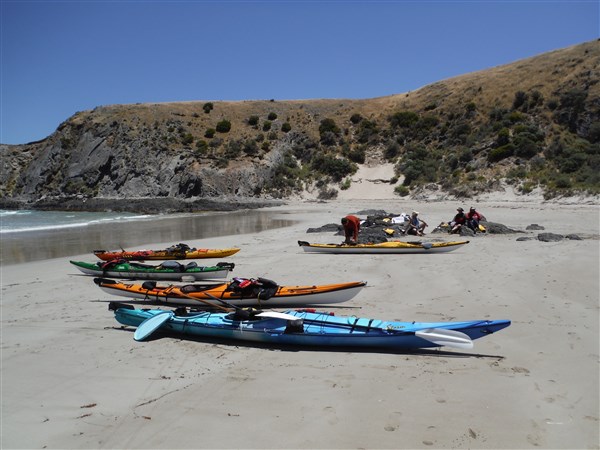
The lunch spot
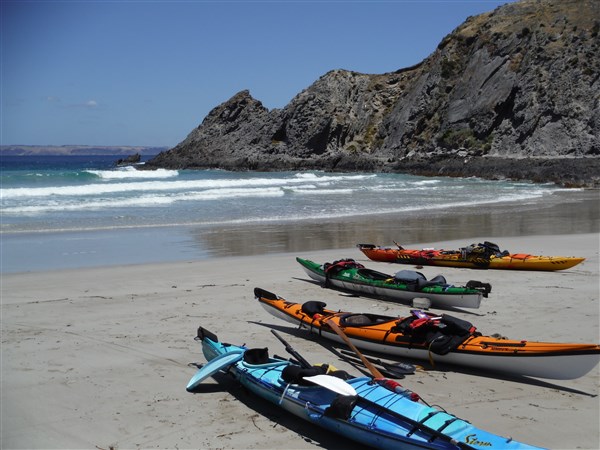
The lunch spot

Looking SW

Looking SW

Looking towards Kangaroo Island

Looking towards Kangaroo Island

Then back on the water through a small surf we found that the wind had abated slightly but still gave us an easy ride home as we picked up the start of the flood tide.

Steve on the way out

Steve on the way out

Again we played around in  some rock gardens resulting in me high and dry on rocks. (sorry no photos !!)

Having fun

Having fun

Among the rocks again

Among the rocks again

Checking out a small ravine

Checking out a small ravine

Many years ago some intrepid fisherman built a “get away” on the headland which is now complete with TV antenna. Unfortunately you can see that the “room with a view” has lost its’ door to a recent gale and now resides at the bottom of the cliff. Still your hardly likely to get too many interruptions here.
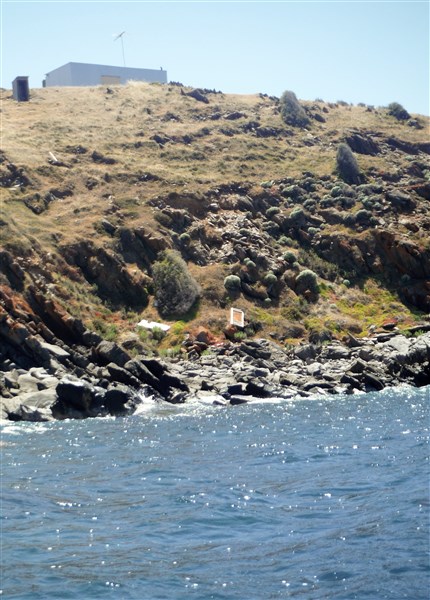
Room for one

Room for one

We arrived back at Cape Jervis just in time to see the Kangaroo Island ferry heading out for Penneshaw. A great way to spend a day on this mainly deserted coastline with a pristine beach lunch stop.

Arriving at the Cape as the ferry departs

Arriving at the Cape as the ferry departs

This is an excellent place for exciting paddling especially as the swell and associated clapatis increases. It should only be paddled by those with the appropriate sea skills and of course a properly fitted out sea kayak.

Happy Paddling
Ian Pope
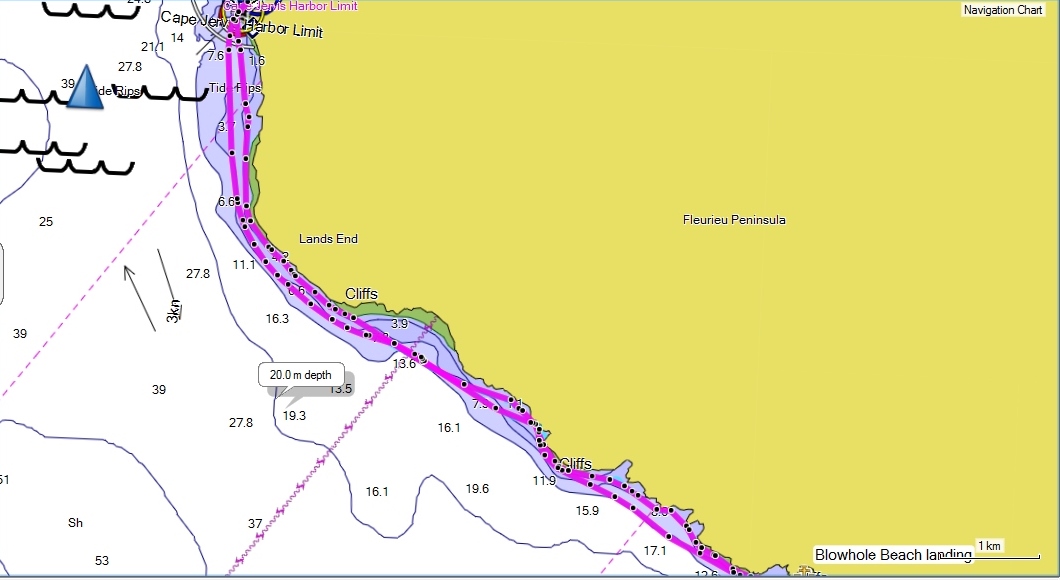
blowhole (2)


Starting point. Cape Jervis
Distance. 18km return
Hazards. This area is subject to a tidal stream of up to 3 knots so paddlers must take this into account on all trips. Note that South Australia has “dodge tides” and more information is available from the Bureau of Meteorology website (bom.gov.au). There are many reefy/rocky areas along the coast as well as the possibility of large breaking waves with the predominant swell being from the SW. There are limited landing spots along this coast even in good conditions. Take care and seek local knowledge.

Chart AUS 780

Paddlers and Photographers Ian, Shaun, Steve, Michael and Rodney
ian smurf crop (2)

jim2 king Yogi bear Sir Rodney Hubert Biggs

Spring Equinox paddle

Sea kayak Day Paddle –  Seal Island Victor Harbor. Well not so much a day paddle, more like a morning sojourn which can be everything from calm to crazy. Today it was moving towards the crazy side.

It’s the Spring Equinox today and you would think we could rustle up a little spring weather for our Spring Equinox paddle but it was nowhere to be seen. It was another of those strange days you get at Victor Harbor in Spring, where it promises sunshine but delivers cold overcast skies. The forecast was for gentle 10kn SE’ly winds with clear skies but the reality was a 15-18kn SE’ly wind opposing a 2 metre SW swell, overcast skies and a temperature around 13C.

Not ideal conditions for this area today and even under ideal conditions you should have good “sea kayak skills” to paddle this area. However, two of us were standing on the beach with not much else to do except get cold and wet so off we went.

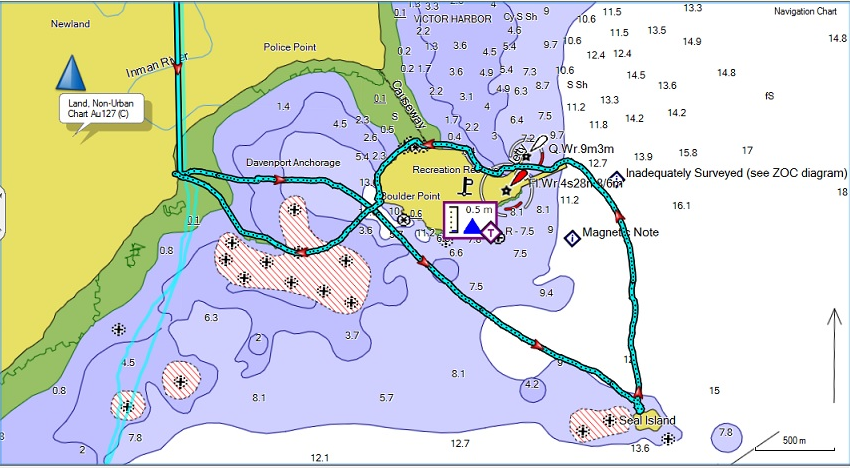
The plan was to paddle from Kent Reserve towards Granite Island, skirting an area of reefy breaks and bommies, then head out to Seal Island, returning via the eastern side of Granite Island.

We headed out getting some protection from Granite Island.

IMG_1445 - Copy

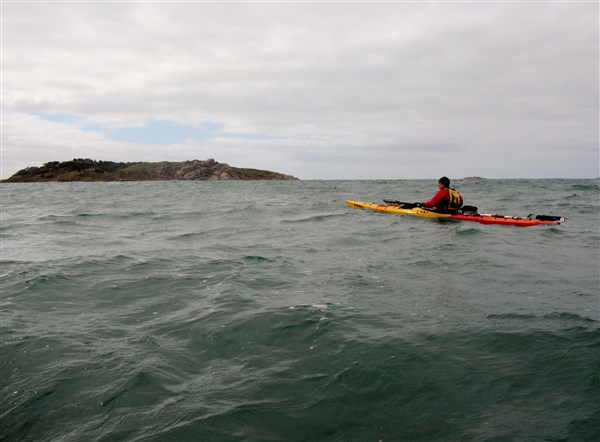
Although the seas soon became confused with wind against swell.

Seal Island in the distance

Seal Island in the distance

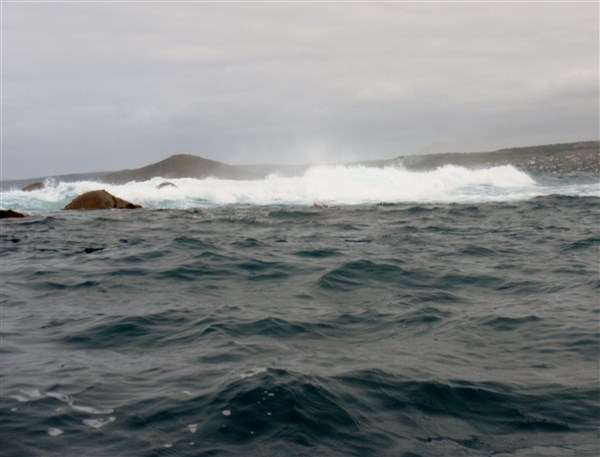
It then became impossible for me to take photos as I was tossed in the steep waves from the wind driven SE hitting the SW swell and also being thumped by occasional large clapatis waves from Granite Island. “BHOP time” (both hands on paddle)

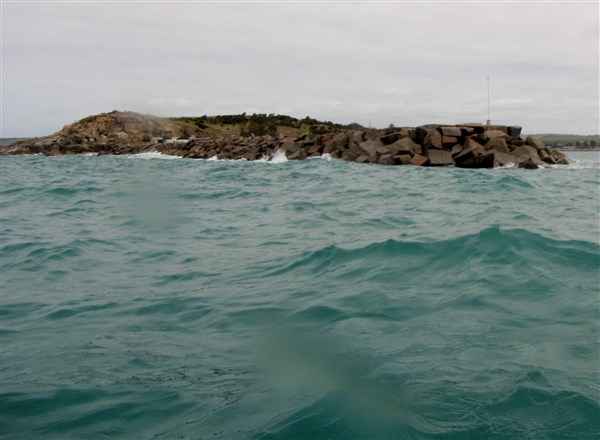
We worked our way out around the various reef breaks .Seal Island is protected by a number of reefy breaks and today all of them were savage.

Nearing Seal Island

Nearing Seal Island

We reached a small protected area near Seal Island.

Reaching a calmer area

Reaching a calmer area

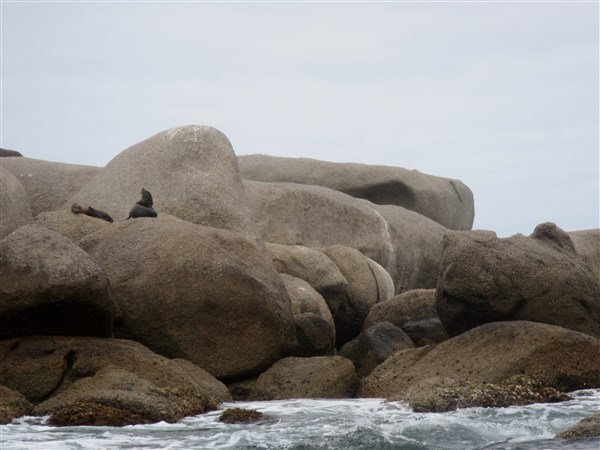
Even the seals decided it was too rough to come out and greet us.

Too cold and wet even for the seals

Too cold and wet even for the seals

Steve was a very happy boy to find a little sheltered spot.

A short respite from the wind

A short respite from the wind

After our short visit with the seals we headed back towards the eastern side of Granite Island with a large lumpy following sea. Again photos were a little difficult to get.

Riding the crests

Riding the crests

Once around the breakwater we were in calm water.

Rounding the breakwater

Rounding the breakwater

Calm waters

Calm waters

Then onward past the jetty.

The boat wharf.

The boat wharf.

Under the causeway

Under the causeway

We watched the tourists on their way onto Granite Island aboard the horse drawn tram…..

IMG_1494

…and then spent some time playing amongst the rocks.

Protected waters

Protected waters. Encounter Bay township in the distance.

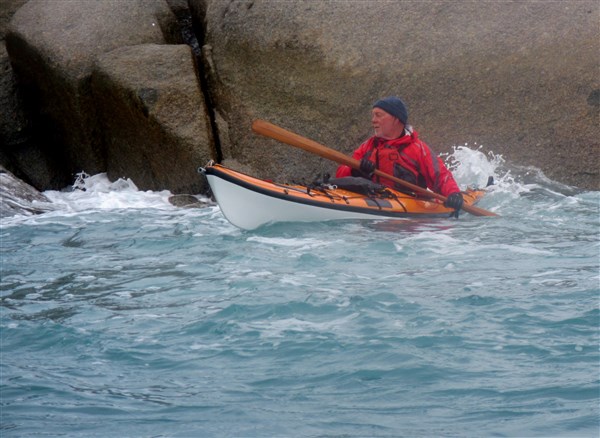
Getting up close and personal with granite boulders

Getting up close and personal with granite boulders

Sliding on the swells

Sliding on the swells

A great morning of paddling to celebrate the Spring Equinox. Now where’s my mountain bike ? I’m heading north to where it’s warmer.  Ian…Paddling South.

Starting point. Kent Reserve Victor Harbor

Distance. 8.5km

Seal Island Victor Harbor paddle

Seal Island Victor Harbor paddle

Hazards. A number of dangerous rocks are charted as well as reefy areas. Clapatis from Granite Island can make for a very confused sea in some places. Swell may break near Granite Island. Consult marine chart before attempting. Avoid paddling close to south side of Granite Island due to large swells breaking and dangerous currents.

Chart AUS 127

pope2king


Paddlers and photographers

Ian                                              Steve

Sea kayak day paddle. West Island Victor Harbor.

 Some of my favourite paddling areas are along the coastline, south of Adelaide.  Accessible for paddlers with appropriate “kayak sea skills” and a properly fitted out sea kayak the West Island of Victor harbor is a perfect day paddle…. Ian “Paddling South”.

I had been invited to join 3 paddlers who were spending a beautiful spring day exploring the area of West Island, just offshore from Victor Harbor, which is 83km south of Adelaide.

This is a great place to paddle in calmer conditions and can test your ability in fresher conditions due to the prevailing swells from the Southern Ocean and clapatis from the granite headlands.

Shauna, Steve, Shaun and myself set off in what was predicted to be a 10-15kn Northerly wind , but was actually a 10-12kn South Easterly. That’s fairly typical on this southern coast where things rarely go to plan, and there is always the possibility of sudden and sometimes severe weather changes.

IMG_1352

Shauna leaving the Davenport anchorage

Leaving Kent Reserve in the Davenport Anchorage our plan was to pass on the inside of Wright Island, head out through Shark Alley which is the passage between Wright Island and the mainland Bluff, then head along the coast to West Island.

Steve on his way to The Bluff

Steve on his way to The Bluff

The SE wind made for good time to Wright Island where we passed close to its’ small beach.

IMG_1353

Wright Island beach.

I was able to pass very close to its’ western side.

IMG_1354

The western side of Wright Island. Calm today but normally hit by SW swells.

As we cleared the wind break of the island the winds and opposing  swell, combined with clapatis from the Bluff to give us a bumpy ride. (If you are not totally comfortable here, turn back now !!).

We were able to get in quite close to the south side of the bluff and could see a group of rock climbers on top of a large granite slab.

Spot the rock climbers?

Spot the rock climbers?

We could see West Island ahead of us.

IMG_1363

West Island ahead

IMG_1366

King Beach on the right as the cliffline starts

IMG_1367

Steve spotting wildlife

West Island is a 10 ha granite island that rises to a maximum height of about 40m in the south-west. Its main conservation value lies with its seabird colonies and small marine research station.

IMG_1373

West Island research station

During the 1880’s it was quarried for granite to construct the foundations of Parliament House, Adelaide. From 1913 until the mid-1960s it was zoned as a Reserve for Government Purposes and, for a short period, was used by the Adelaide University Regiment as a target for gunnery practice during field exercises. In 1966 it became a fauna reserve. It was declared a Conservation Park in 1972 and in 1973 and 1975 Pearson Island rock-wallabies were introduced to the island. I am still to spot one of the wallabies on the island so maybe they have not fared well.

The island has a number of NZ fur seals who were lazing on the granite boulders or swimming around our kayaks.

seals west islan 4d

Seals coming out to greet us

seals west island 1

…and coming in for a closer look

seals west island2

Shauna tries to capture this guy on film

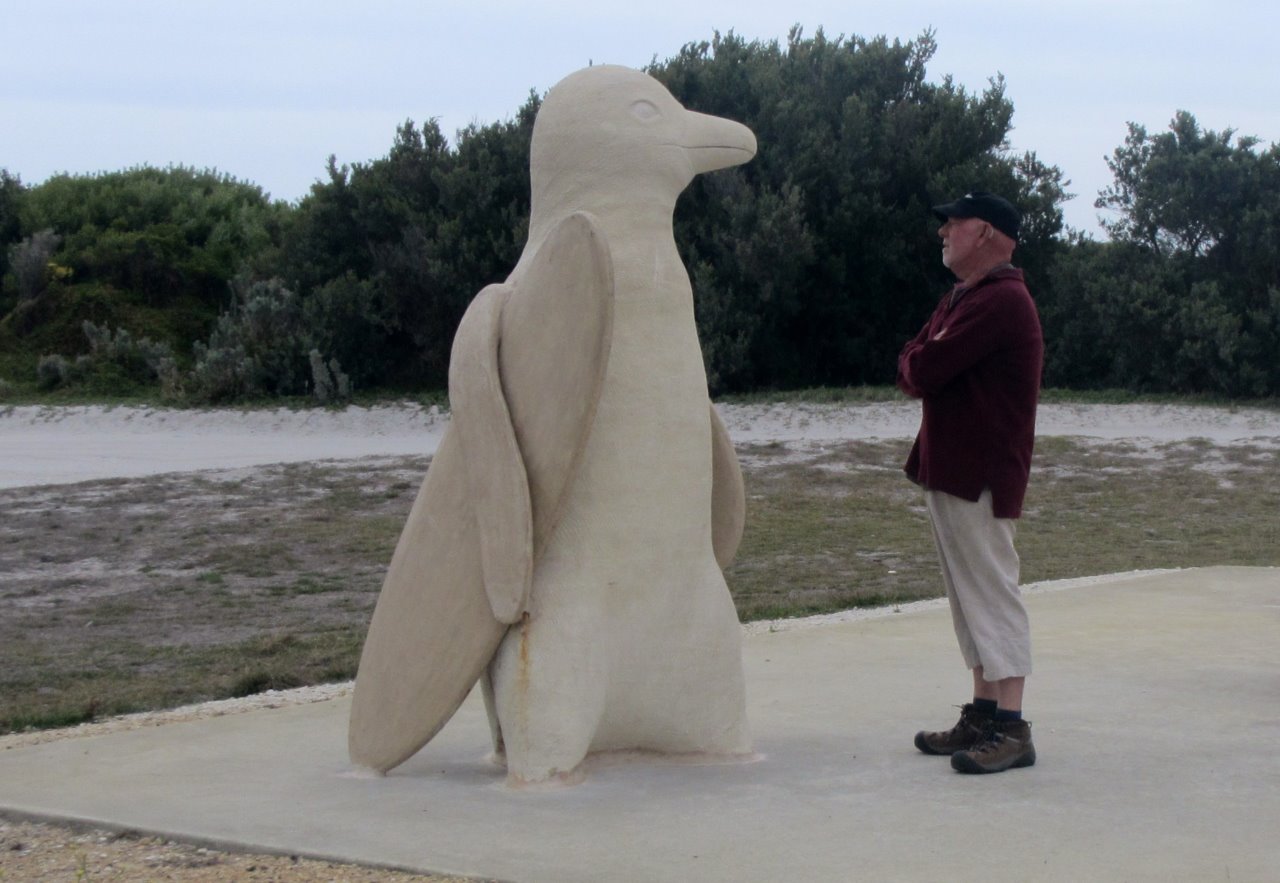
Breeding seabirds include Little Penguins, Silver Gulls, Caspian and Fairy Terns. The Little penguin population has suffered a dramatic decline since the 1990’s. In 1992, the population was estimated to be around 4000 penguins. In June 2011, the population was estimated to be less than 20 penguins.The decline echoes the decline of the colony on nearby Granite Island and many other island in the southern ocean and the cause is still largely unknown.

IMG_1381

Shaun investigating where granite has been mined in the past

With the wind abating for a short period we circumnavigated the island……

IMG_1424

Western side of the island where the water is 30m deep

IMG_1395

Granite boulders in strange stacks

IMG_1420

Shaun having a closer look at the coastline

It's getting a little bumpy now

It’s getting a little bumpy now

IMG_1399

Granite seascapes

………….with Steve playing for a while in “rock gardens”.

IMG_1418

Now be careful Steve

IMG_1419

Having FUN

We then steered a course back to Wright Island and its’ small beach as the wind started to swing to the predicted NE direction. A great spot for lunch.

IMG_1425

The predicted wind finally arrives.

Lunch on the beach ……….

20150913_125525

….followed by a head wind paddle back to our starting spot made for a very enjoyable day.

20150913_125205

IMG_1359


This is an excellent place for exciting paddling especially as the swell and associated clapatis increases. It should only be paddled by those with the appropriate sea skills and of course a properly fitted out sea kayak.

log

Starting point. Kent Reserve Victor Harbor

Distance. 13km

Hazards. A number of dangerous rocks are charted as well as reefy areas. Clapatis from the headlands can make for a very confused sea in some places. Swell may break in some parts of Shark Alley. Consult marine chart before attempting. Avoid Petrel Cove, west of Rosetta Head due to rips and dangerous rocks.

Chart AUS 127

Paddlers and photographers

stick shauna

kingpope2jim2


Shauna                      Steve                      Ian                        Shaun

Paddling the Scraper

“We were 73 days out from San Francisco. and entering Backstairs Passage, with less than a days’ sailing to our destination.”

“When we passed CapeWilloughby there was a strong south-east gale with a heavy sea. All hands were on deck and the vessel was running before the gale. I kept the vessel as close on to the western shore as I judged it was safe, as by so doing I would be able to shape a course for Cape Jervis….. Just at this time, as we were entering the passage, to my surprise the vessel struck the outer edge of the Scraper (reef). The wheel was at once put hard down, so as to get farther out, but the next sea hurled her farther in, and the vessel would not answer the helm.”

That was the fate of the 4 masted Schooner “Kona” in 1917, bound for South Australia with a load of lumber from San Francisco and their introduction to the Scraper Reef off the coast of Kangaroo Island. Luckily the 11 crew were able to launch a lifeboat and were washed into the calm waters of Antechamber Bay.

Fortunately our meeting with the Scraper was in very different weather conditions. We had decided to paddle across Backstairs Passage, which is a particularly turbulent stretch of water dividing Kangaroo Island from the mainland. Conditions are made interesting by a 3kn tidal current being squeezed through the Passage as well as the Yatala Shoals, although the Autumn neap tide suggested calmer seas.

Our plan was to paddle across Backstairs Passage to Antechamber Bay and set up camp, paddle the Scraper in calm conditions the following day, then catch a tide back to Cape Jervis on the mainland the next day. With luck we could also venture a few kilometres further along the east coast to land on the tiny beach at Pink Bay near Cape Willoughby Lighthouse, which is the most eastern point of Kangaroo Island.

No mistakes; no miscalculations; extreme caution was in order as getting caught in the wrong place or the wrong tidal stream can mean being swept southwards. Michael and I had done this crossing many times in various conditions but it was Rodney’s first crossing. He had been putting in many hours training in the kayak, not only doing endurance work but lots of sessions paddling the coast in windy, sloppy conditions combined with many sessions handling large surf waves.

We had picked a Neap tide to cross the Strait as the tidal movement would be minimal. The forecast in the morning was for 11kn SE which is a cross wind that would be blowing against the Ebb tide flow. Wind against tide always makes for a very choppy passage and with that in mind we set off from Cape Jervis.

Day 1.
The predicted 11kn SE wind rose to about 15kn soon after departure and went more to a ESE direction giving us a side on sea of around 1m. Lots of white caps and sloppy conditions but easily handled.

Riding the beam on swells into Backstairs Passage


Short choppy waves hitting beam on

We were able to use the side sea  to our advantage, often catching small runs that picked up the laden kayaks. The crossing took 2hr 15m and was generally uneventful except for a few waves that pitched up suddenly and landed a ton of water on your shoulder. It’s also a little difficult taking photos in these conditions, so please excuse our defects.

Kangaroo Island approaching

We just missed running over a wooden pallet that had been floating for some time, given the number of barnacles on it.

Floating Flotsam

We had made a couple of course changes during the paddle as we found the wind was holding us further west than we had originally calculated. We hit the shore of Kangaroo Island at Cuttlefish Bay, a tiny sandy bay only accessible by water, exactly as planned.

Arriving Cuttlefish Bay


Cuttlefish Bay. Emergency landing spot if needed.

The next job was to push east on the last of the Ebb tide and into a wind that had now gone even more easterly. This meant no protection provided by the high cliffs and lots of boiling clapotis on every small headland. The next 8km took us another 2hr  of hard paddling before we rounded the headland into Antechamber Bay.

Working our way along the cliff face. Resting out of the wind.


All smiles as we head into the wind


The Navigator

The camp was located inland a few hundred metres on the banks of the Chapman River, however on such a low tide the mouth was closed and a portage was required.

Landed on Antechamber Beach


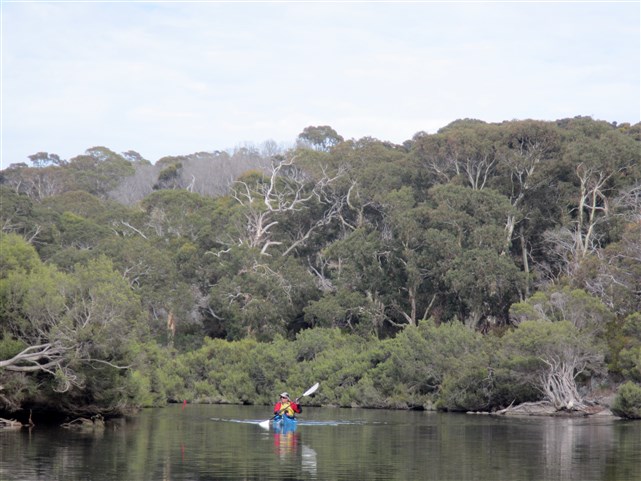
Paddling up the Chapman River


View along the river

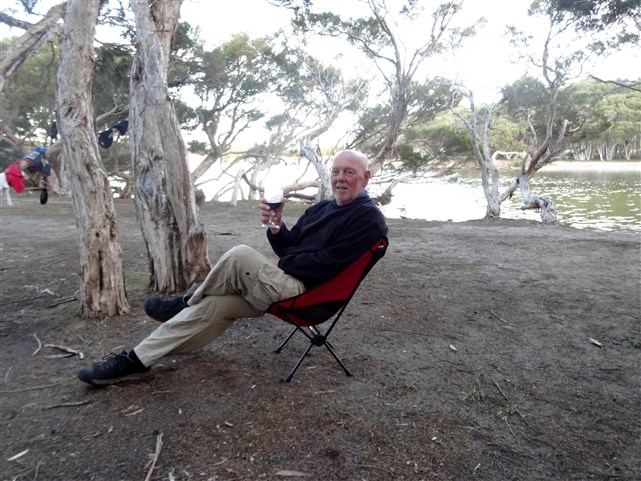
This riverside campsite went perfectly with a Grant Burge Shiraz, kindly supplied by Rodney, our personal sommelier.

Early evening drinks and snacks

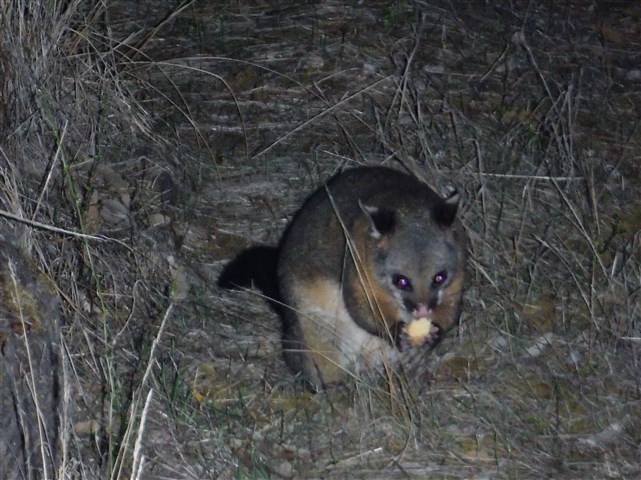
I did tell Rodney the Possums were very friendly but he was still a little amazed to find one sitting at the table with him. This guy grabbed some food and ran.

This guy believes in self serve

The next day was perfect weather with only a light 4kn breeze predicted and very little tidal movement. We set off to portage back into the ocean and head for the Scraper Reef and then to Cape Willoughby and Pink Bay .

Members of the South Australian Boat Draggers Association in action.

The boat draggers


Heading out of Antechamber Bay

The Scraper lays approx. 1km off Cape St Albans and is well known for its’ large breaking waves in any easterly weather. Water over the reef is only 1 fathom deep (about 3.3ft/ 1.82m) taken on an average tide.

Unfortunately “Google Earth” doesn’t show “The Scaper” but you can get an idea of the wave action nearby if you view Cape St Albans photographs.

As we rounded Cape St Albans we caught a glimpse of large breaking waves but they were mainly slow moving swells across the reef.

Cape St Albans Lighthouse


Arriving at the Scraper on slack water with the calmest conditions I have ever seen here

I paddled into the edge of the reef while Rodney took photos and Michael stood by as our safety paddler.

Riding a “Scraper” swell

We then pushed on towards Cape Willoughby.

Cape Willougby Lighthouse in the distance

….. and landed at nearby Pink Bay.

A calm cove for lunch

You can see the remains of previous inhabitants.

Evidence of habitation

After a lunch stop it was back on the water to catch a small flood tide back to camp.

Heading north from Cape Willoughby Lighthouse

On the way we spent time playing in the rocks around Cape St Albans.

Floating along the cliff face


Floating around the rocks at Cape St Albans

Day 3
Light rain had fallen during the night and the wind was evident even in our protected campsite.

Light rain all night


Checking the weather from a warm place

We checked weather forecasts through a couple of sources which both predicted an acceptable wind from the SE. We had a phone conversation and ascertained that the wind at nearby Penneshaw was currently 11kn from the SE and it was expected to remain that way for a few hours.

We decided to cross earlier than planned as the last hour of the very small ebb tide would be overridden by the SE wind. We would then be running a flood tide with the wind in the same direction.

We packed and portaged back into Antechamber bay where conditions were as expected, being at the bottom of Beaufort Wind Scale around 4, meaning “smaller waves, becoming larger; numerous whitecaps”.  Our heading would take us within 1 nautical mile of the Yatala Shoals so I knew from experience that the waves would be quite steep and confused where the tidal rips collide.

We started off across the passage with the conditions as predicted.

Goodbye to Antechamer Bay

After 1 hr we found the SE wind had picked up slightly making for sloppy conditions with larger swells and occasional breaking seas. It was actually lots of fun making fast runs down steep waves and then being surrounded in deep troughs.

Michael and I were enjoying the conditions and Rodney was really getting the hang of running parallel to the waves, rising and falling as they swept under him.

Rodney having a fun day out


Michael was there one second and buried in water the next


Keeping on track

Everything continued to plan as we approached Blowhole Creek on the mainland and then started our run west to Cape Jervis staying a couple of kilometres offshore to get the best of the following sea.

Heading for Blowhole Creek (the gap in the hills)


Resting before the run into Cape Jervis

We arrived at Cape Jervis 4 hours after launching, with the crossing of Backstairs Passage from Antechamber Bay to Blowhole Creek taking around 2hr 30m.

Our last duty to load up and head for the Yankalilla Bakery, for a decent cappuccino and pasty.

DSCF5355


Paddlers and photographs by Ian, Michael and Rodney. Editing by Ian.

pope2Yogi bearSir Rodney


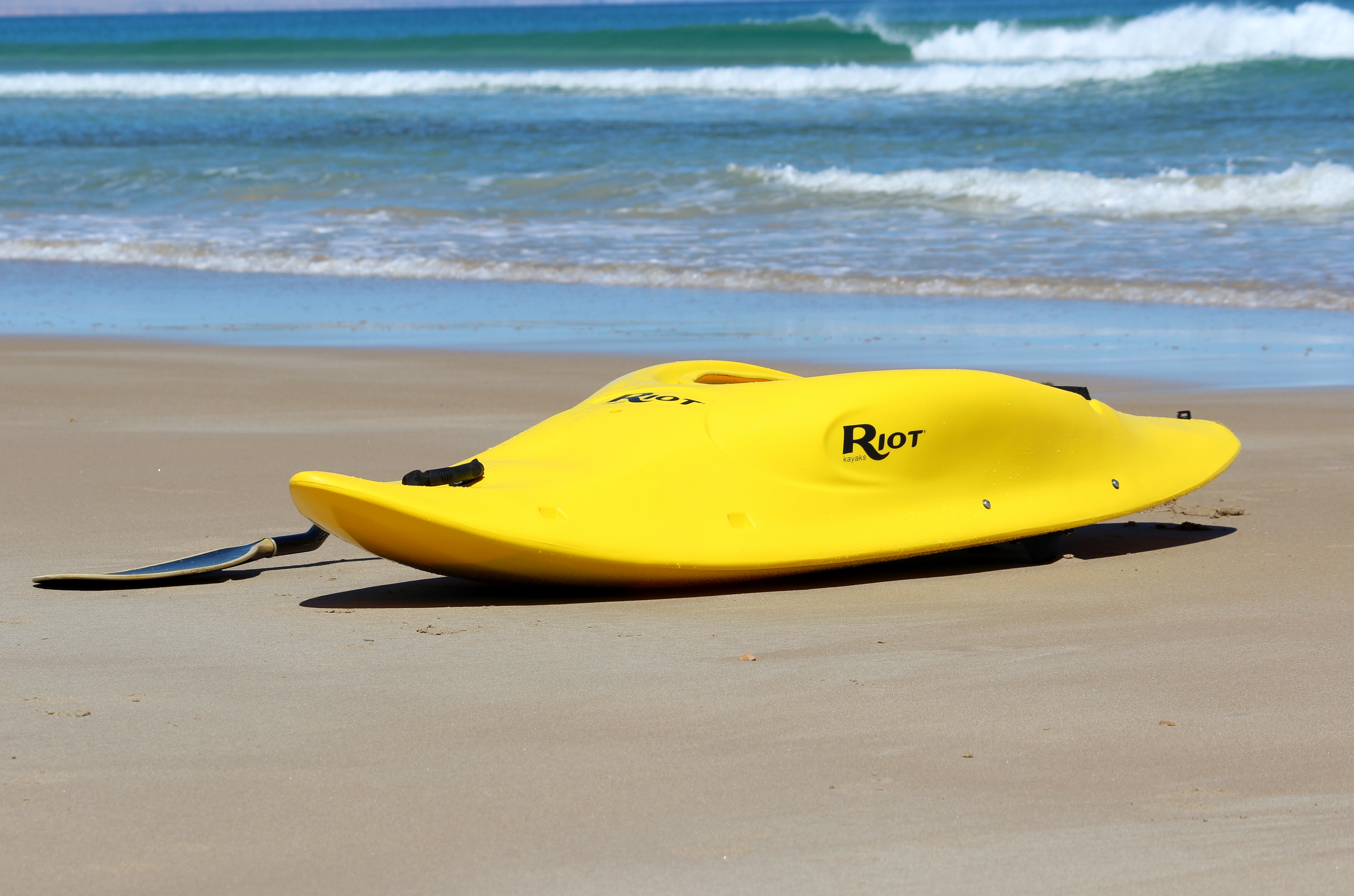
Let’s go Boogie – Riot boogie 50 surf kayak

Life’s been a bit busy lately, what with new toys to play with and people wanting help with kayak fitouts and getting in lots of fun paddles.

I was asked to fit new footrests in a Riot Boogie 50, a surf kayak that I hadn’t paddled before, so I was fully booked for another day. The Boogie 50 comes with foam wedge blocks that are to be cut to the appropriate length for the paddler. Yes the system works, well for some people anyway, but I find them quite limiting when a couple of people want to share the kayak.

IMG_8412Originally the Riot Boogie 50 was set up for adjustable footrests,such as “Footstops”, as the mouldings for them are still in the kayak deck. Again, I find that style less than ideal in a surf kayak so I purchased a set of “Jackson Happy Feet” that would set up the kayak nicely.

First job was to remove the centre foam block ,which is easy after removing the securing tab in the deck and whacking sideways with a large rubber mallet. Then I cut the block to the leg length of the paddler so that it allowed  more heel space. Next it was simply a matter of using some of the surplus hard foam foot wedges, cut to size, to fill most of the kayak bow and then insert the Jackson Happy Feet inflatable footrests. Reinsert the centre foam pillar into the kayak, again with a rubber mallet, re-secure the pillar and your’e ready to inflate the footrests and set them in place.

If you haven’t come across Jackson Happy Feet before, follow this link to check them out. An absolutely brilliant system for getting a solid footrest into any surf or playboat.  I got the Happy Feet from Canoes Plus in Victoria, Australia, who are also the retailer for the Riot Boogie 50 and Jackson Kayaks.

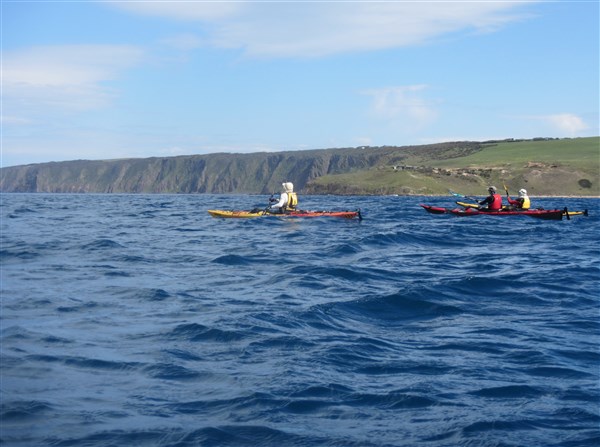
Of course to check out my handy work I needed to hit the water. The local surf was tiny however it was big enough to check out the footrest adjustment and the kayak. The gallery at the bottom shows me in the yellow Riot Boogie and Rodney in a green Jackson Fun, having lots of fun on a beautiful Autumn day.
The Boogie is an older surf kayak design, however I was impressed by it characteristics, being stable to paddle and quite comfortable with an integrated seat and backrest. I managed an hour playing around in small surf and was able to get excellent speed with the 3 fins moved to a forward position. It also rolled easily as I found out when lacking a little concentration as a wave dumped on me. The polyethylene construction, combined with its solid handling characteristics, makes it an ideal choice for beginner to intermediate surf paddlers. The low volume tail, sharp rails on the back and long roomy front end, provides lots of carving power and allows for paddlers of all sizes.  In fact I liked it so much I think I will add one to my toy box very shortly…..Happy Paddling ….Ian

This slideshow requires JavaScript.

 Kayak Spedifications

Length Width Weight Cockpit Dims Volume
7’9” 24.7” 36.3 lbs 32” x 17” 50 US gal
236 cm 63 cm 16.5 kg 81 x 43 cm 189 L
›› Surfing powerseat
›› Customizable foam footblocks
›› Drainplug
›› Molded-in padded knee pockets
›› Two rubber grab loops

The beach perspective

The wind was picking up a little and the temperature had dropped a degree or two as I stood on the headland watching the wave sets roll in. I could see the low pressure front on the horizon and knew I probably had an hour or more before it hit. I really wanted to get out for a kayak surf but there was just that hint of doubt about the conditions.

There were regular sets of thick waves coming through, so I sat and watched for a while. I could see the shore break booming onto the beach and knew that it would take good timing to break out off the beach but it looked manageable.View from the cliff top

I wandered over to Rhino rock and checked out the swell. Certainly looked manageable from here, high up on the headland.

Rhino rock

Rhino rock

Maybe it would be better in the small bay the other side of Camel rock.

Camel Rock

Camel Rock

Sure; it seemed a little on the  “big fat wave” side of things but manageable. These waves are big, fat and hugely powerful but that means that the ride is fast, furious and sometimes a bit scary. I grabbed the kayak off the car and got my gear ready.

Maybe I should just check out that shore break from down on the beach. Get that “beach perspective”. Yep; check out the “BP” and maybe be a little on the cautious side seeing we are surfing the Southern Ocean swells direct from Antarctica.

They crash onto the craggy headlands and bays around this area of Southern Australia, which I suppose is why the area is known as the Shipwreck Coast.
I walked down to the lower track towards the bay to check out the shore break ”BP” just as a nice set came in.

Nice sets...but that's only the shore break

Nice sets…but that’s only the shore break

Down on the beach for the "BP"

Down on the beach for the “BP”


IMG_0050

Errr..... maybe not today

Errr….. maybe not today

Hmmmm………….maybe it’s one of those days when you just need to give it a miss and hang out with the locals.

Chatting with a local

Chatting with a local