The Adventure Playbook

I was lucky enough to come across the Adventures of Clarke Carter some time ago when he dragged wheeled kayaks across a frozen Victoria Island and skied from the North Pole to Canada. He then sailed the Southern Ocean, paddled the Sepik River of Papua New Guinea in a dugout canoe and attempted to row across Bass Strait from the Australian Mainland to Tasmania.

Not bad for a guy still in his twenties and now as well as his job as a film maker he has published an e-book on adventure with the aim of encouraging others to share his love of the outdoors. You can download the free e-book and follow his blog here. For all you kayaking fans out there he has a short section on sea kayak adventure on page 44 and hopefully this will inspire your own trips.

The epic adventure of crossing Bass Strait from the Australian mainland to Tasmania is covered on page 24 and the photos on the page were taken by me on my 3 Bass Strait Kayak Expeditions, so that at least puts me ahead of Clarke in one adventure count !.

Other favourites from my Bass Strait Expeditions can be found here

Cheers
Ian

Cape Catastrophe

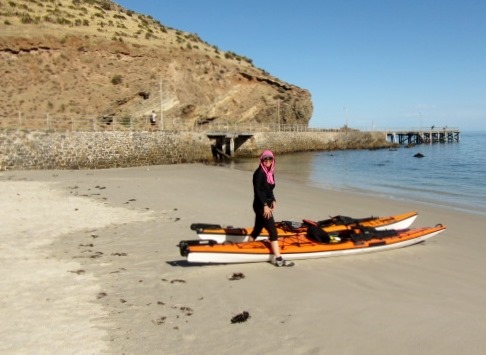
Standing on the white sands of Memory Cove looking out over a beautiful azure blue sea makes you forget the dangers of this area. This sandy beach is much the same as Matthew Flinders saw  when he discovered the area in 1802 and we were standing on the beach 212 years later to the day.

Cove-view.jpg

On 21 February 1802, Flinders’ expedition suffered a tragic  loss of crew  when ship master John Thistle, midshipman William Taylor and six seamen were drowned when their cutter capsized while searching for fresh water. The seamen were J. Little, George Lewis, John Hopkins, William Smith, Thomas Grindall and Robert Williams. Flinders was deeply affected by this disaster and recorded place names including Thorny Passage, Memory Cove, Cape Catastrophe, and Thistle Island to commemorate the lives lost and named islands in the area after the crew members. 

Flinders placed a plaque at Memory Cove and a replica is now installed.

IMG_6970

We left Memory Cove in sight of the nearby islands bound for Cape Catastrophe and the nearby Sea Lion colony.

Launching at Memory Cove

Launching at Memory Cove

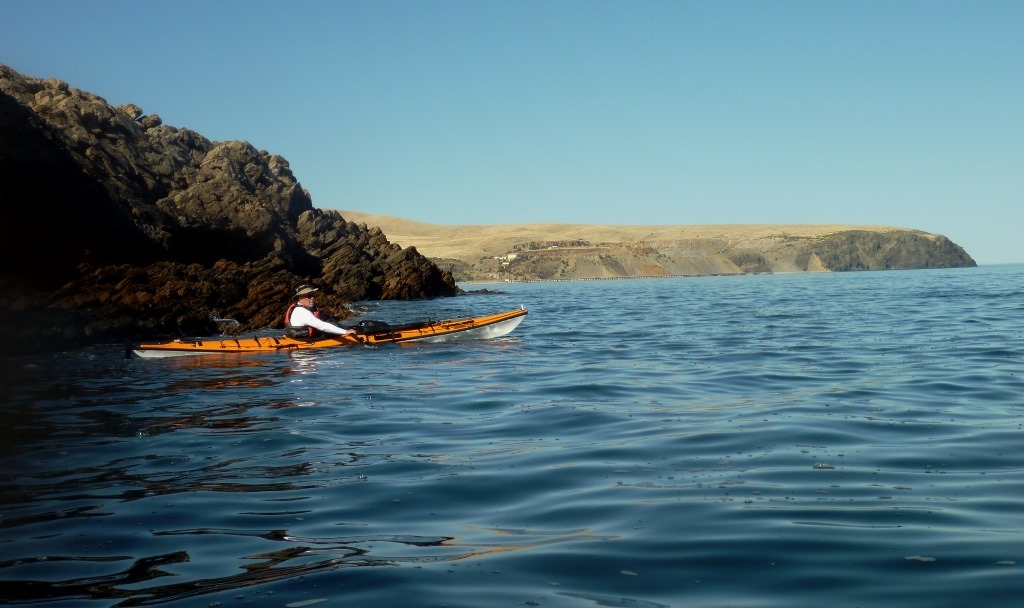
Sheltering behind a small headland to admire the view

Sheltering behind a small headland to admire the view

P1060827

P1060643

The weather had been kind to us so far with the temperature  a nice 25 degrees Celsius and the winds just a gentle breeze. We followed the coast line south from the Cove checking out many of the rocky crevices and spectacular cliff faces. The water is deep here, has a deep green colour and is known for crayfish and tuna fishing. We were only a few km’s  from Dangerous Reef. a breeding ground for white pointer sharks so it is likely they too are around here somewhere as well.

P1060708

P1060769

IMG_0471

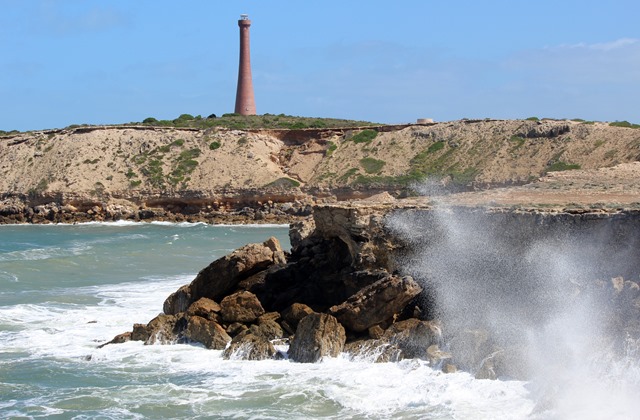
This coastline is a mixture of rugged outcrops, dangerous waves, sandy protected coves and long white beaches.

P1060839

P1070006

Wave rocks

Wave rocks

P1060956

Not many people venture this way but sadly some come to grief.

IMG_7009

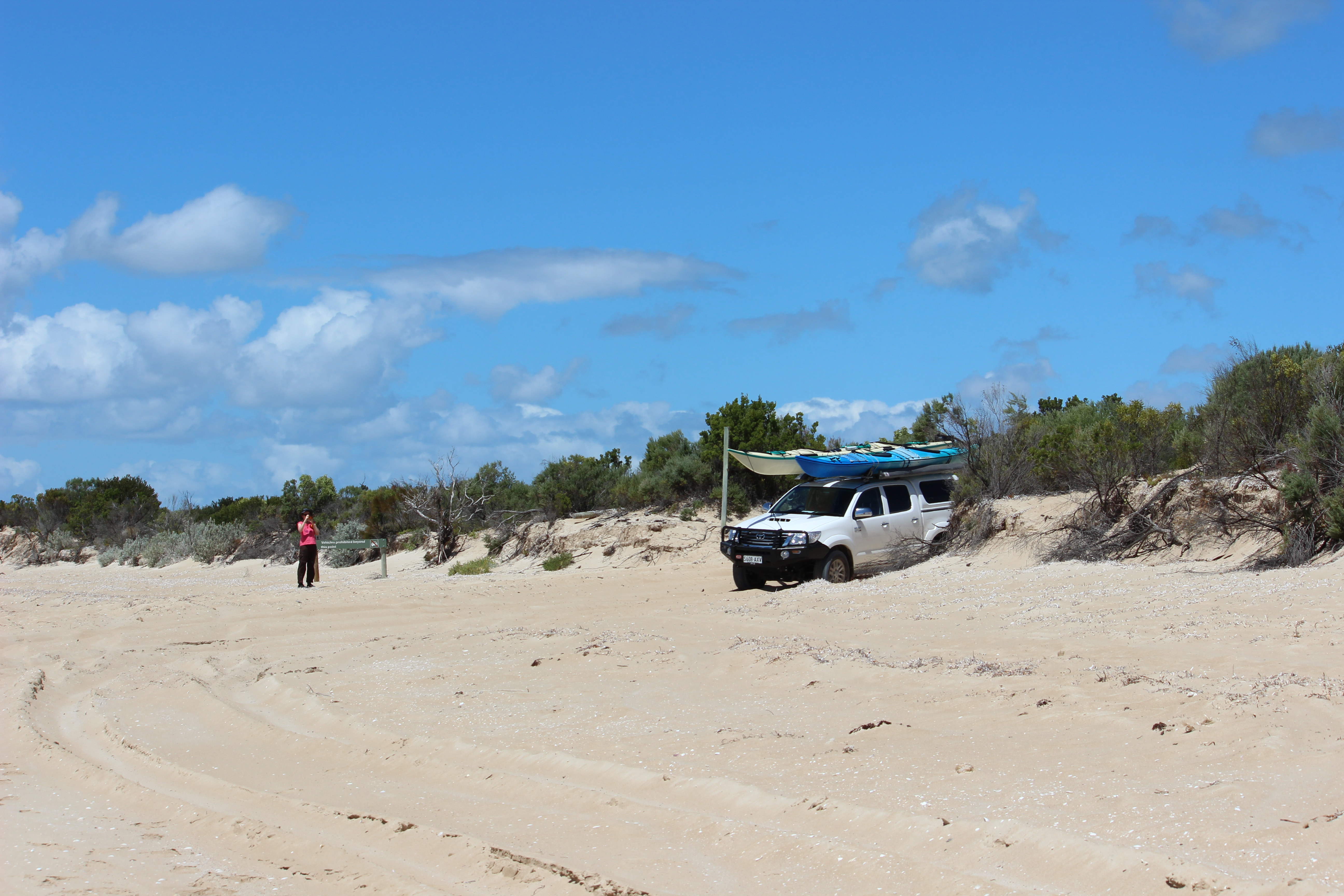
Later we moved on around the peninsula to paddle the calm waters of Coffin bay. An interesting drive over deep sand and rough tracks, but well worth the effort.

IMG_8672

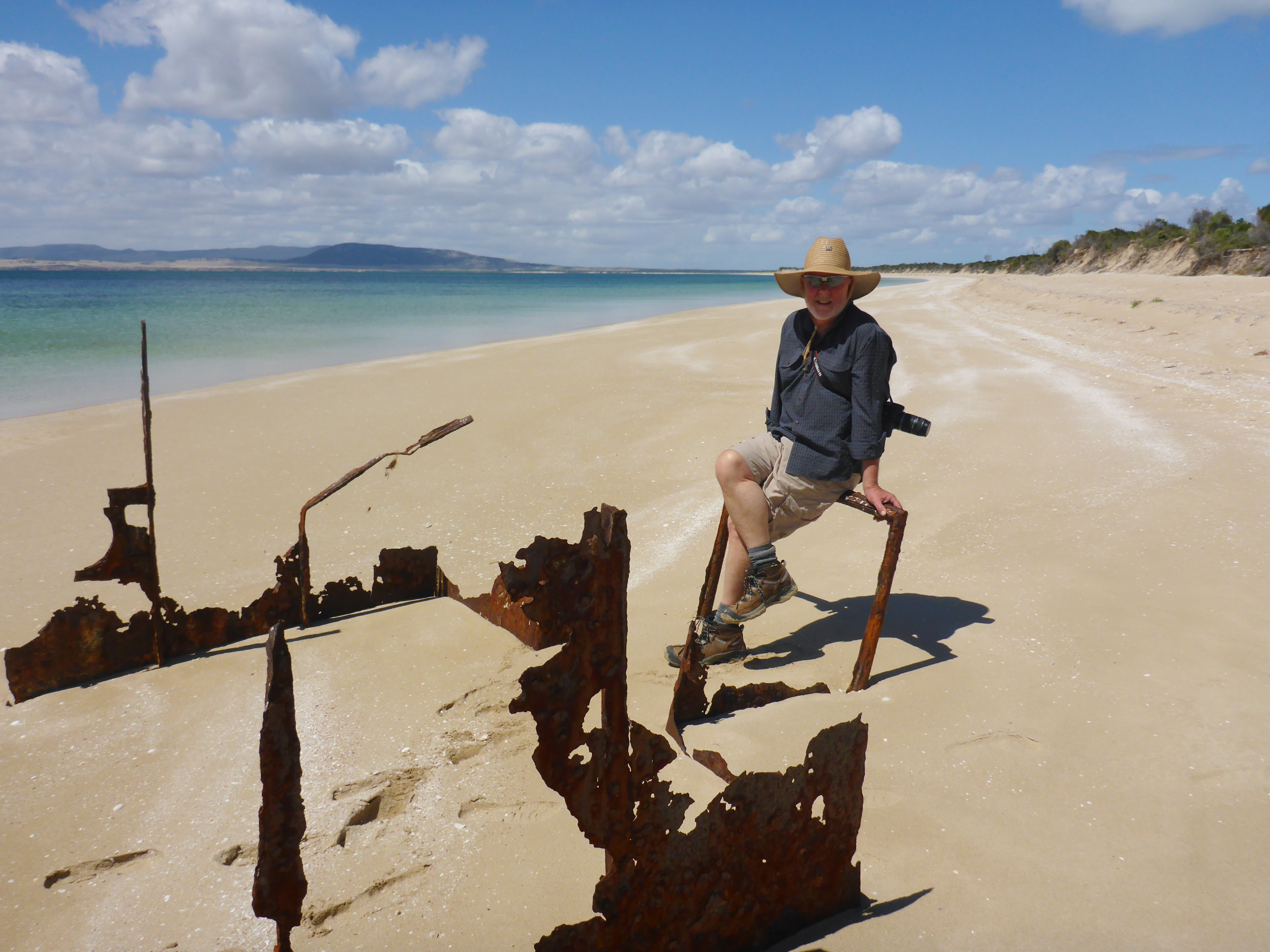
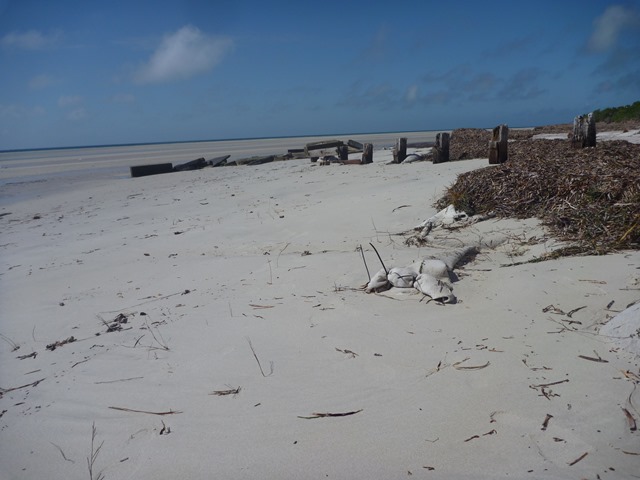
Finding the remains of a wrecked fishing boat buried in the sand.

P1070156

Setting off from 7 Mile Beach it was west in the sheltered bay for lunch and  more sand dunes to climb.

IMG_8837

P1070873

The next couple of days were spent exploring the area around Black Springs.

IMG_7071

P1070109

Later we drove the 20 km sand and limestone 4WD track into Coffin Bay National Park and spent time exploring some of the more inaccessible launching spots.

P1070777

IMG_7037

We spotted a number of the local inhabitants in our travels.
One afternoon 2 large goannas wandered through our camp and climbed a tree near us.

IMG_9240

On occasions we had emus wander through our camp.

IMG_8747

Kangaroos spent time watching us.

P1090750

Dolphins whizzed by in a large pod about 30 strong.

P1080391

Wedge tailed eagles circled overhead looking for an easy meal.

IMG_7099

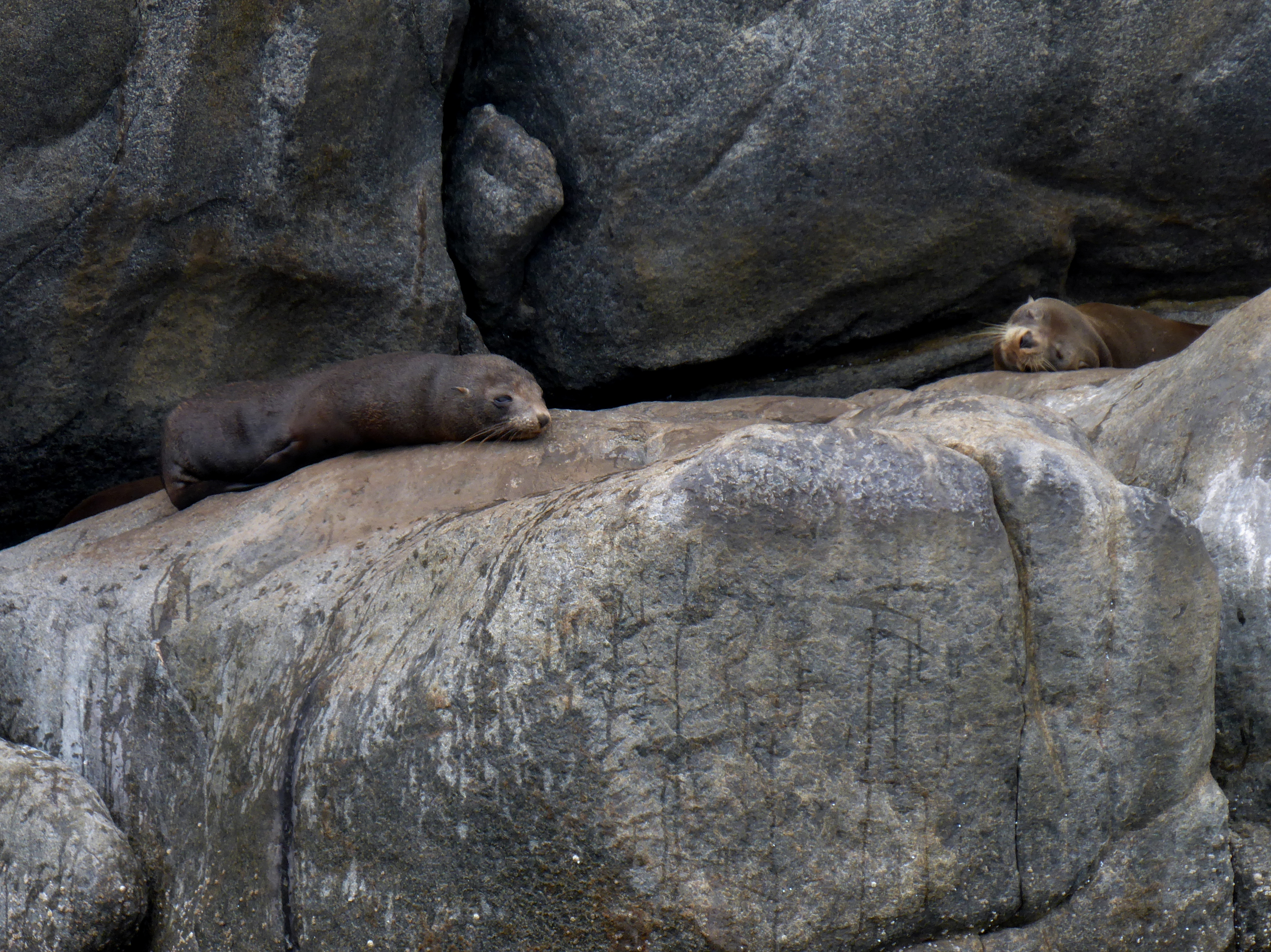
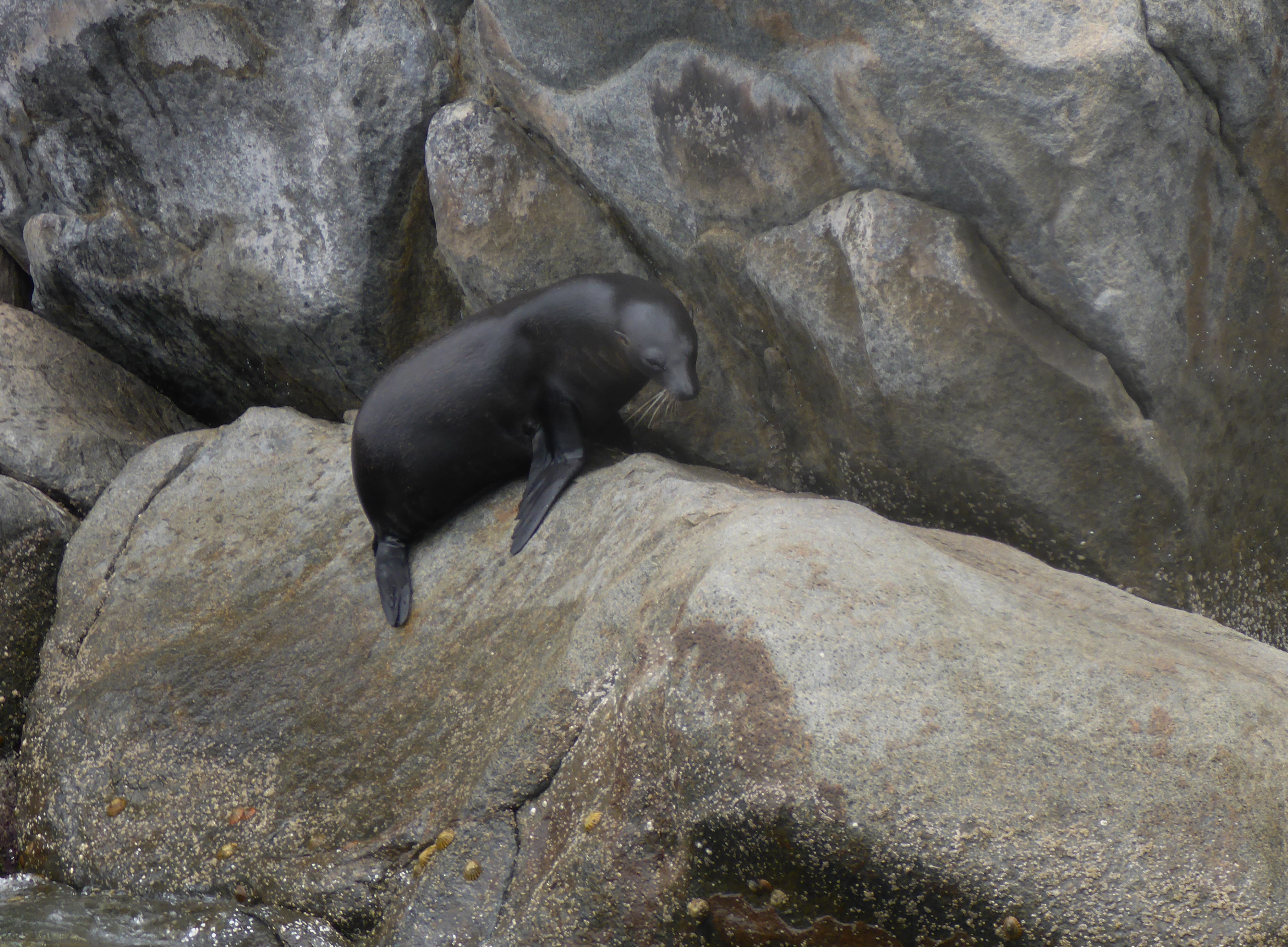
Sea Lions lazed about on the rocks.

Sea Lions doing what they do best---relax on a warm rock

Sea Lions doing what they do best—relax on a warm rock

Sea birds of all varieties squawked overhead.

P1070539

Of course there were other less cuddly locals.

P1070388

A great place to spend a couple of weeks exploring the coast. Lots of interesting paddling locations ranging from calm to challenging all with great scenery and wildlife.

We headed east coming across the familiar landscape of the inland areas and decided to divert to the north Flinders Ranges for a week of exploring. 

P1080580

The Second Valley- kayak Second Valley to Rapid Heads

I don’t actually remember the first time I paddled into the Second Valley. It must have been in the very late 1970’s as I have found photos of our expeditions further south at Cape Jervis in 1984. Luckily “ The Valley” viewed from the sea has  changed  little in that time. Ron Blum, long time resident of the township, published  “The history of Second Valley” in 1985 and I remember kayaking with him around that time. We both went on to paddle kayak marathons together especially the Murray 400km and Murray 200km races. Ron is still active in the Marathon Canoe Club  and a link to his achievements is here. (I was the club’s first secretary)

I have been asked several times recently about paddling the area, so it was here that I decided to start a month or so of paddling along the coastline of South Australia, hoping for some interesting photos. Second Valley on the Fleurieu Peninsula is 100km south of Adelaide, the State’s capital, and has become a regular haunt for sea kayakers and scuba divers.

Scene-near-Rapid-Bay-George-French-Angas-1847.jpgThe image above was by George French Angas in 1847 depicting local Aborigines fishing at Second Valley. Not a lot has changed as you can stand at the small jetty and easily see the features from the painting.

Our idea was to launch at Second Valley, paddle along the rugged coastline, past Rapid Bay and onto Rapid Heads where we often found New Zealand Fur Seals, Sea Lions and Dolphins.  The small beach is an easy launching spot although it can be crowded with locals cooling their heels on a hot summers day. We set off around 9am to miss the predicted scorching 43 degree heat of the day and also avoided any crowds. We call any more than 3 people a crowd !!!

Ready to launch at Second Valley beach

Ready to launch at Second Valley beach

The last of the fishing village heritage disappeared with the removal of the tumble down boat sheds from the headland in 2009, however you can still see some of the foundations and the old launching winch.
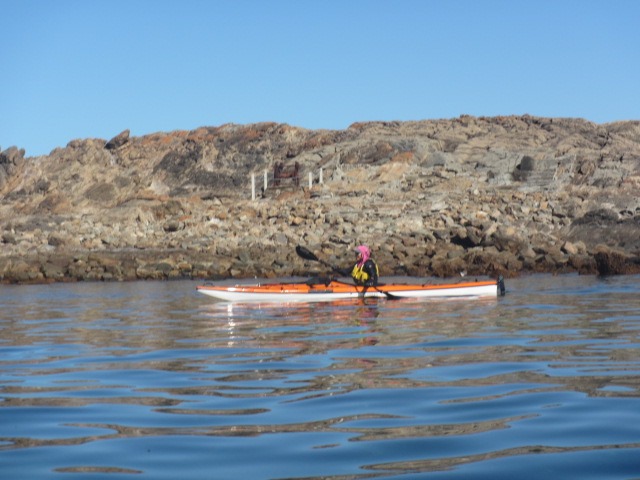
Robyn passes the remains of the old fishing sheds and launching winch

Robyn passes the remains of the old fishing sheds and launching winch

After rounding the rocks on the outer of the bay you get a view of what’s to come.  You can see Rapid Bay just a couple of kilometres away with Rapid Headland in the distance. Few people venture far around the coast so often you will have the place to yourself as we did.

P1020392-1024x608.jpg

Heading towards Rapid Heads

Heading towards Rapid Heads

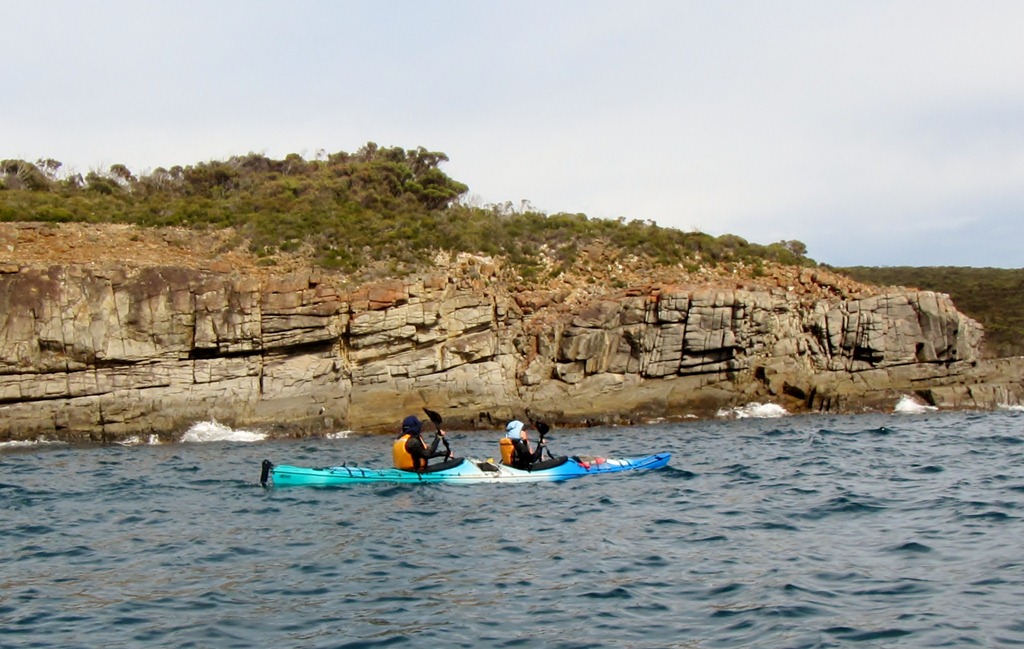
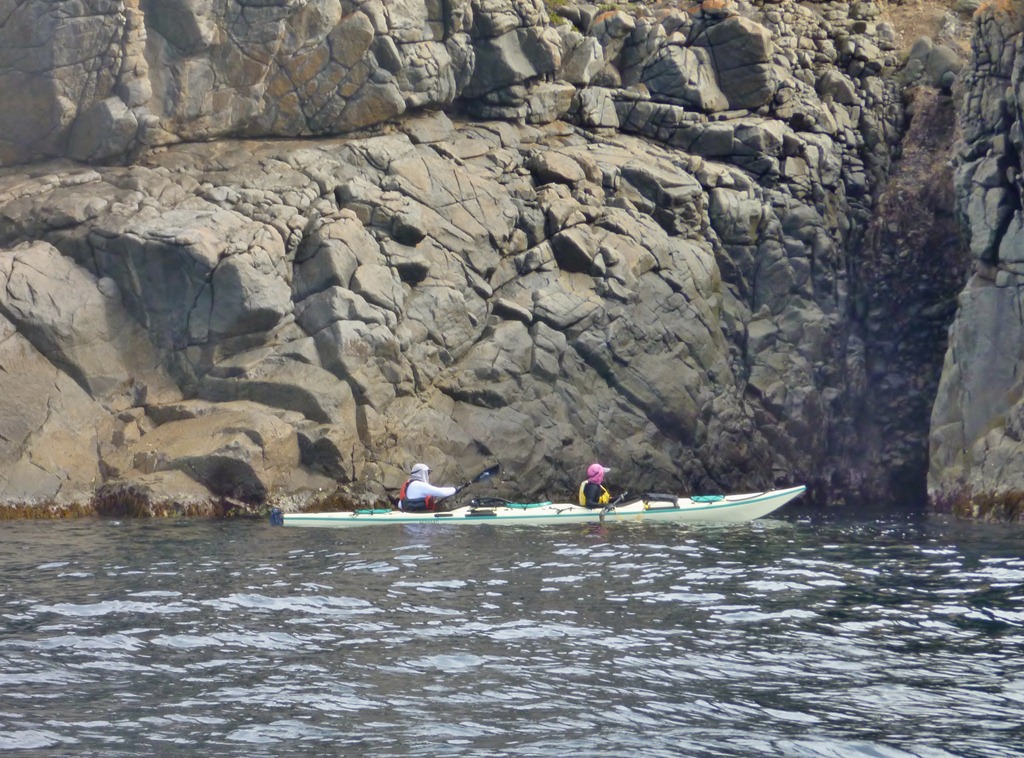
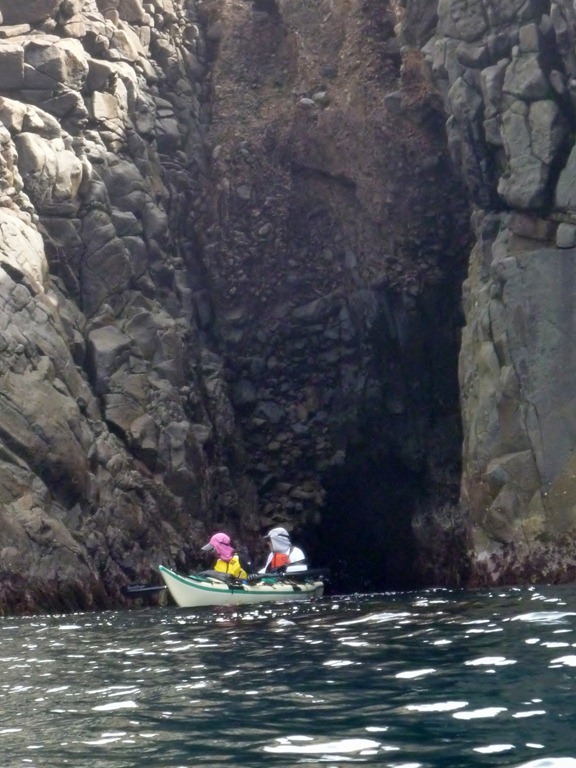
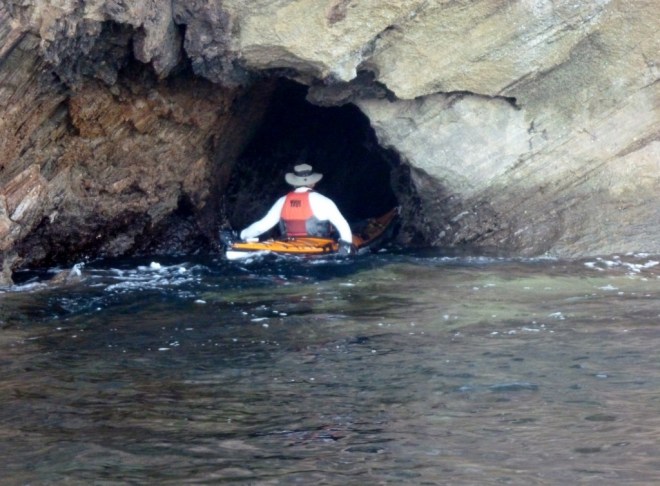
Not far along you come to the Second Valley sea cave. Its not huge but just big enough to get a couple of sea kayaks in there. At one time we had 6 kayaks in at once but it was very squeezy. Robyn waited at the entrance as I explored the cave, taking a couple of minutes for my eyes to adjust to the darkness. The cave entrance is easy to navigate however care should be taken when there is a SW swell evident.

Taking in the view along the rugged coastline

Taking in the view along the rugged coastline

Once in the cave it was easy to turn around and find Robyn taking a photo at the entrance.

Paddling out of the cave I found Robyn taking photos

Paddling out of the cave I found Robyn taking photos

Further on there are other small grottos to explore and lots of spectacular rock formations…….
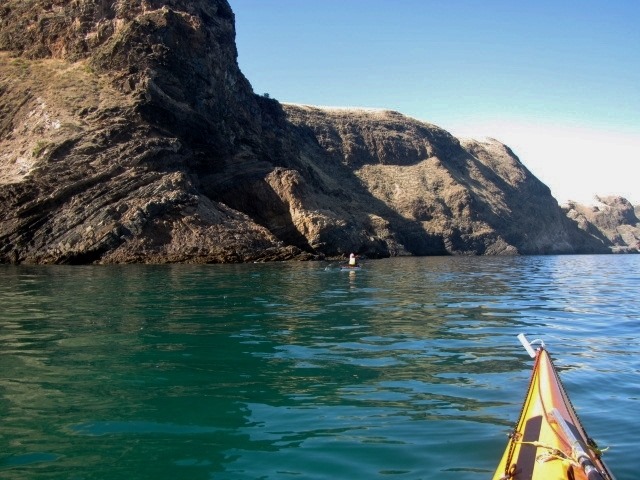
Paddling along the ancient coastline
Paddling along the ancient coastline


Another fissure to explore

Another fissure to explore


Ian exploring one of the small grottos in the cliff

Ian exploring one of the small grottos in the cliff

…..and a couple of secluded beaches which we would visit later for a relaxing swim.

One of the many small secluded beaches

One of the many small secluded beaches

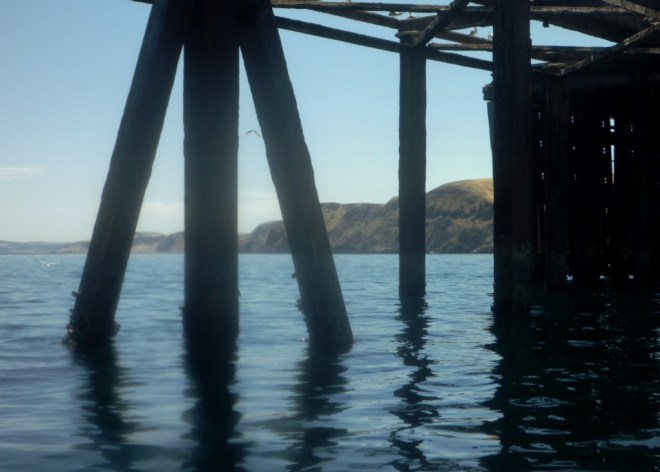
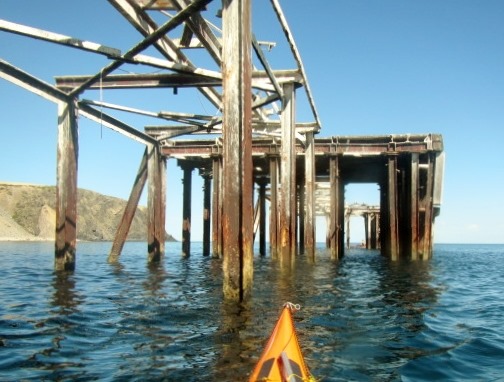
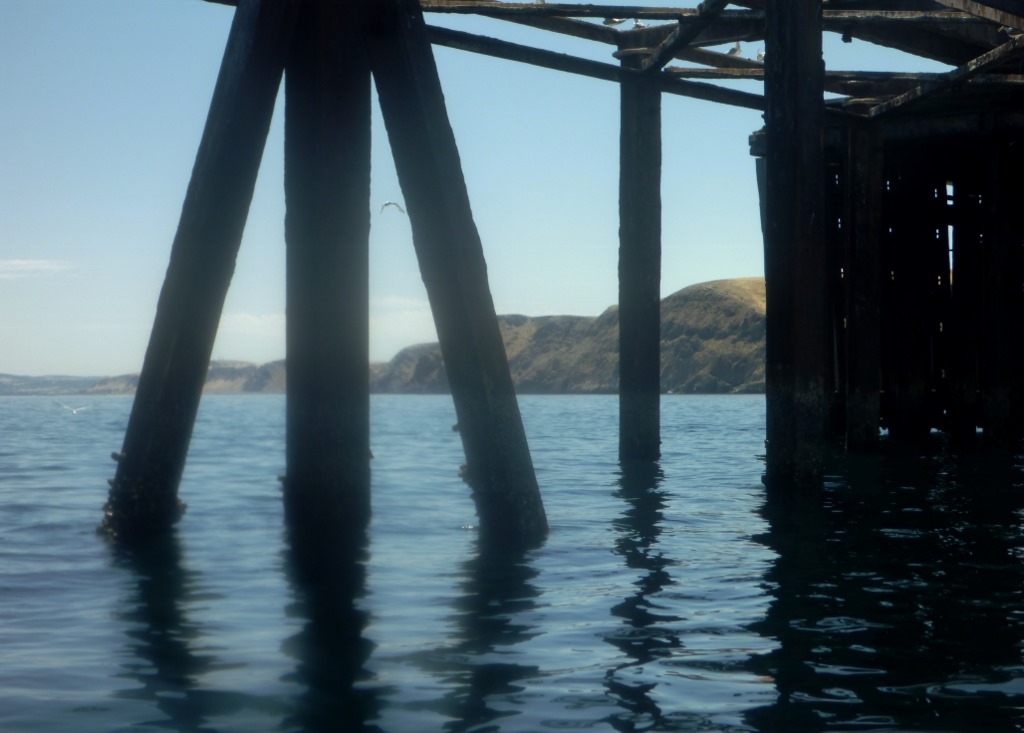
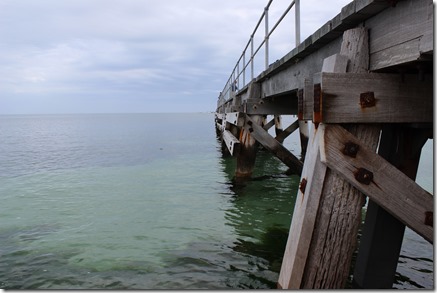
Further on you can make out the Rapid Bay jetties. The larger structure was used as a loading wharf when BHP was mining in this area. The jetty has now fallen into disrepair but is a haven for fish life. A smaller jetty was built near it for recreational fisherman and scuba divers.

P1020419-1024x731.jpg

The structure also makes for some interesting photos.

IMG_0386-504x382.jpg

Looking towards Second Valley

Looking towards Second Valley

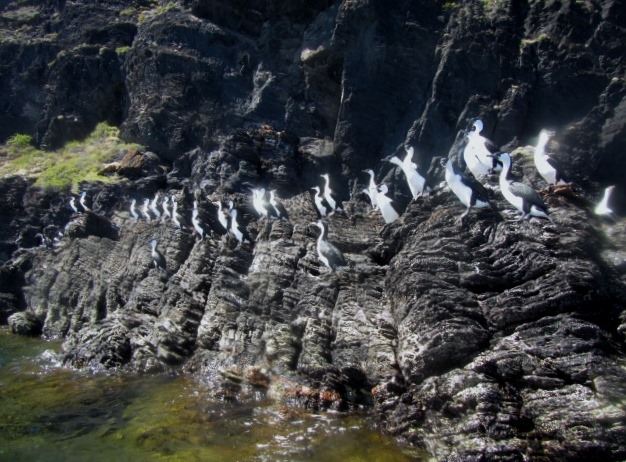
After passing Rapid Heads, where there is often a confused sea around the bommies, we found the seals playground. Today there were only a few New Zealand Fur Seals lolling about, but often there are also Australian Sea Lions in residence. The Pied Cormorants seems always to be here in reasonable numbers and the trick is not to disturb them lest they decide to take off in a hurry, necessitating the empyting of their bowels. Not a pretty site splatting across the deck of your kayak, or you (always wear a hat !!).

Pied Cormorants, commonly called Shags all ready for take-off

Pied Cormorants, commonly called Shags all ready for take-off

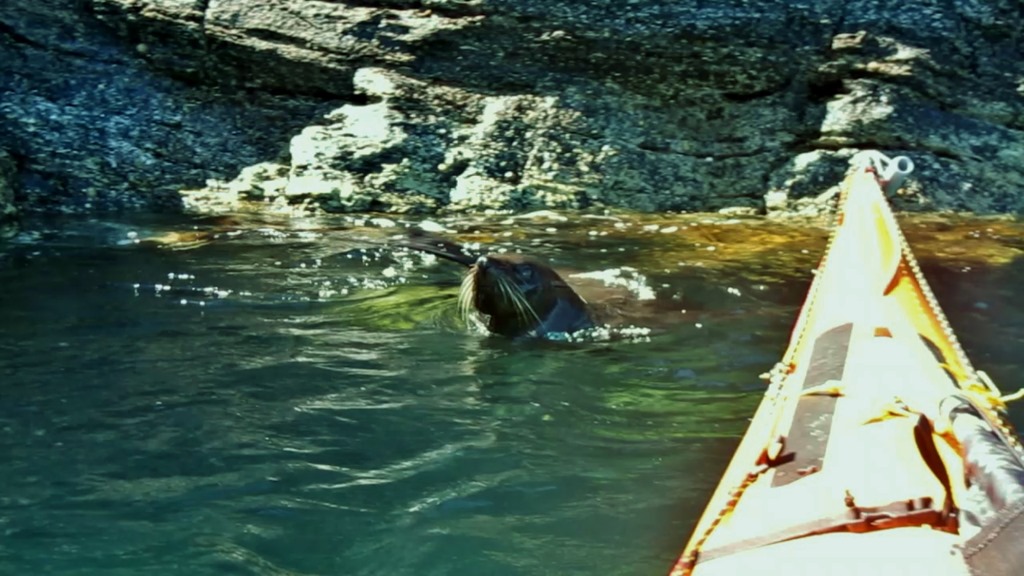
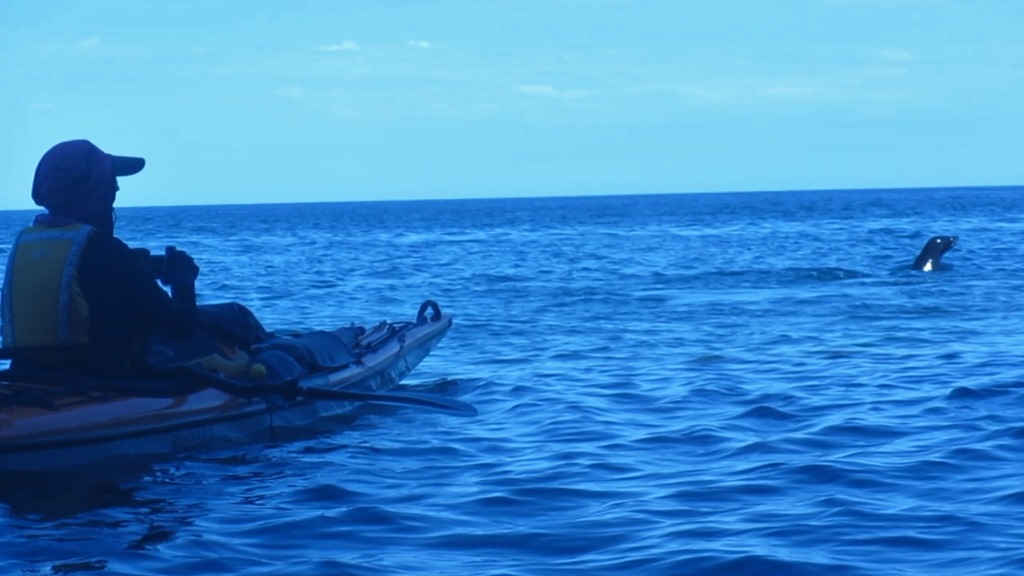
We met up with all the usual suspects. NZ fur seals bobbing around the bow of the kayak and dolphins speeding past on their way south.
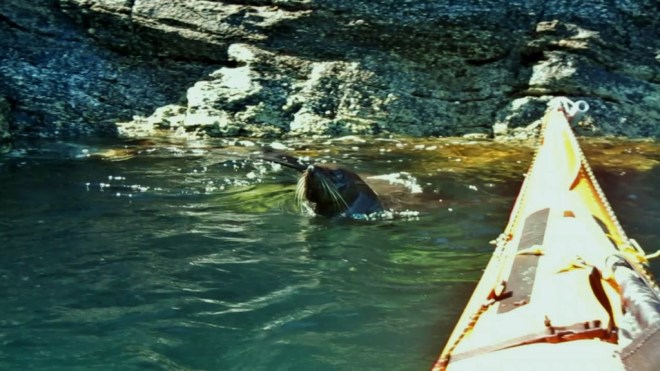
Suddenly there was a set of whiskers on my bow

Suddenly there was a set of whiskers on my bow


Robyn is visited by an inquisitive seal

Robyn is visited by an inquisitive seal

Second Valley and Rapid Bay areas offer lots to the sea kayaker and the whole day trip is only 12 km or so, allowing plenty of time to explore or have a relaxing lunch on one of the secluded beaches.

Picnic Island – kayaking day trip

The spring weather has come at last and we seized a few days away to do some day paddles along the coast of Yorke Peninsula. The usual suspects were rounded up and we met at Edithburgh, a town that we have visited before. Our previous trip are here  and here

Edithburgh was a busy port in the past but now it’s more a place for relaxation and fishing from the jetty.

IMG_6742_thumb.jpg

Over dinner, talk somehow touched on the question of “what food would you take to a deserted island”. Everyone came up with their ideas and the nearest deserted island was easily located a cruisey 9km offshore.

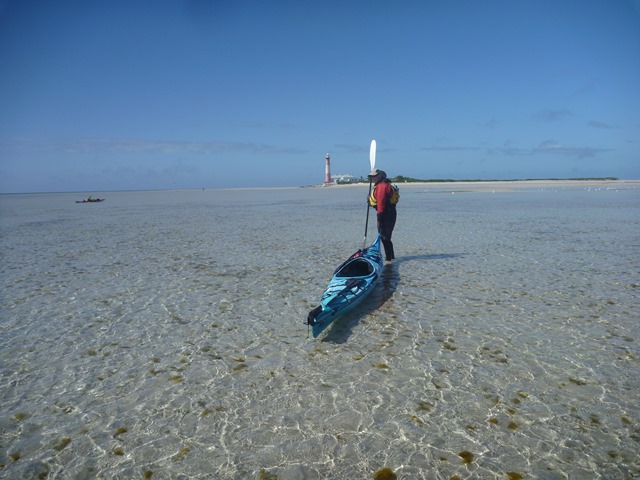
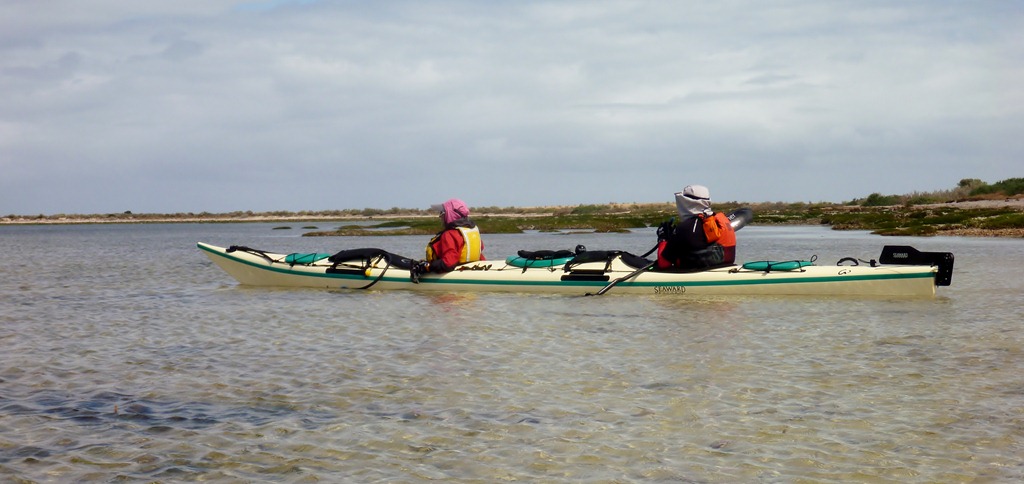
Next morning we set off to our picnic on deserted Troubridge Island, a low sandy island and lighthouse.

P1020376.jpg

We were loaded with our picnic fare of Adelaide hills blue cheese, wafer crackers, McLaren Vale kalamata olives, garlic fetta, local crusty bread, hommos with caramelised onions, Paris Creek camembert and of course strawberry jam sandwiches for Michael.

Our arrival was greeted by a number of black swans gliding in the shallows.

P1020381.jpg

The shallow waters surrounding the sandy island were crystal clear and we could see crabs scurrying about.

OLYMPUS DIGITAL CAMERA

Michael decided to investigate the shallows

P1020384.jpg

While Robyn dragged the Passat G3 double kayak ashore (Ian was busy taking photos)

P1020386.jpg

The low tide and recent storms have uncovered some of the old wharf.

P1020389.jpg

The kayaks were stranded on the sandbar as the tide ebbed away.

P9220436.jpg

Our picnic lunch was had in bright sunshine sitting on the base of the lighthouse, waiting for the flood tide to lift our kayaks off the sandbar.

As is the custom we always enjoy the food and  wine of south Australia, this time choosing a superb bottle of Etruscan from Koltz Wines at Blewett Springs. We decided the wine wouldn’t travel well in the hatch of a hot kayak, so we decanted it ready for the nights’ barbecue.  (the bottle in the photo was a nice touch !!)  See our wine review at the bottom of the page.

P9220443.jpg

The next few days were spent doing day trips along the coast around Troubridge Hill aquatic reserve

IMG_6773.jpg

IMG_6787.jpg

and landing on deserted beaches

IMG_6784.jpg

Our Wine of the Week

2011 Koltz Etruscan     $25 per bottle.
Chosen by Ian after recently catching up with winemaker Mark Day and visiting the winery.  This wine is a  distinctive blending of varieties that we were eager to sample. Check out the winery here

The 2011 Etruscan is 80% Sangiovese , 10% Sagrantino and 10% Shiraz, grown in vineyards  in Blewitt Springs and  McLaren Vale. It is fermented in 1 tonne open fermenters and the majority of the wine undergoes extended maceration for up to 35 days. Then basket pressed and transferred to French oak barrels.

The Etruscan smells of red berry fruits and the Sangiovese is dominant on the palate. A great wine to drink with food and highly recommended by our tasters. – ” definitely value for money against many other wines of the region”

Rocky Islands paddle

We continued our journey along the South Australian coastline staying overnight at Mambray Creek campsite. A short walk in the morning meant a meeting with some of the local wildlife.

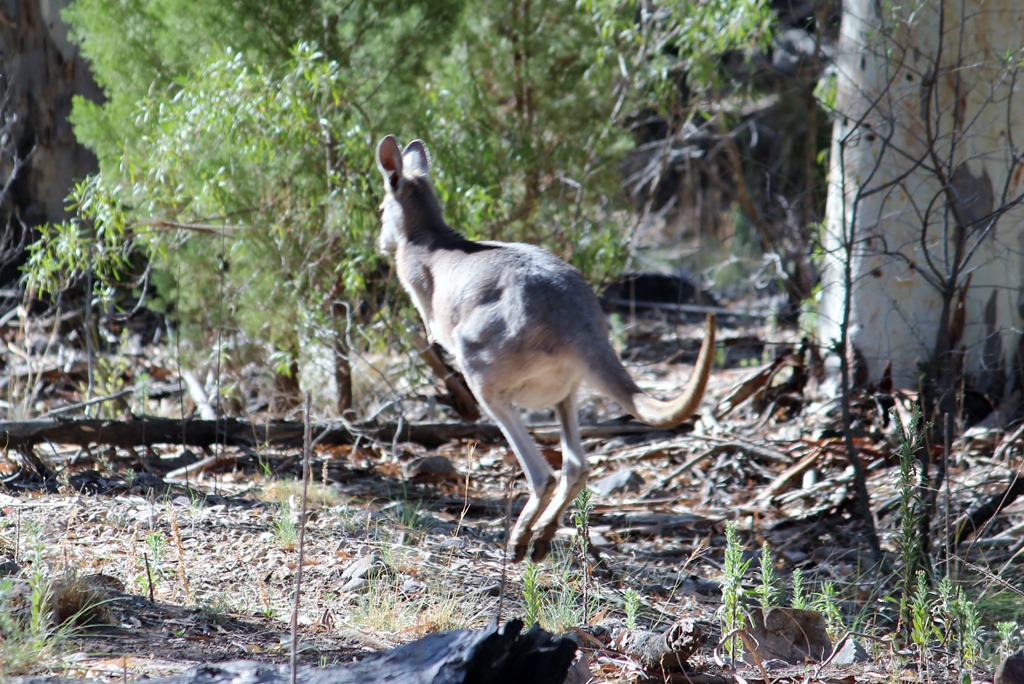
A number of kangaroos bounded across the track…..IMG_5601

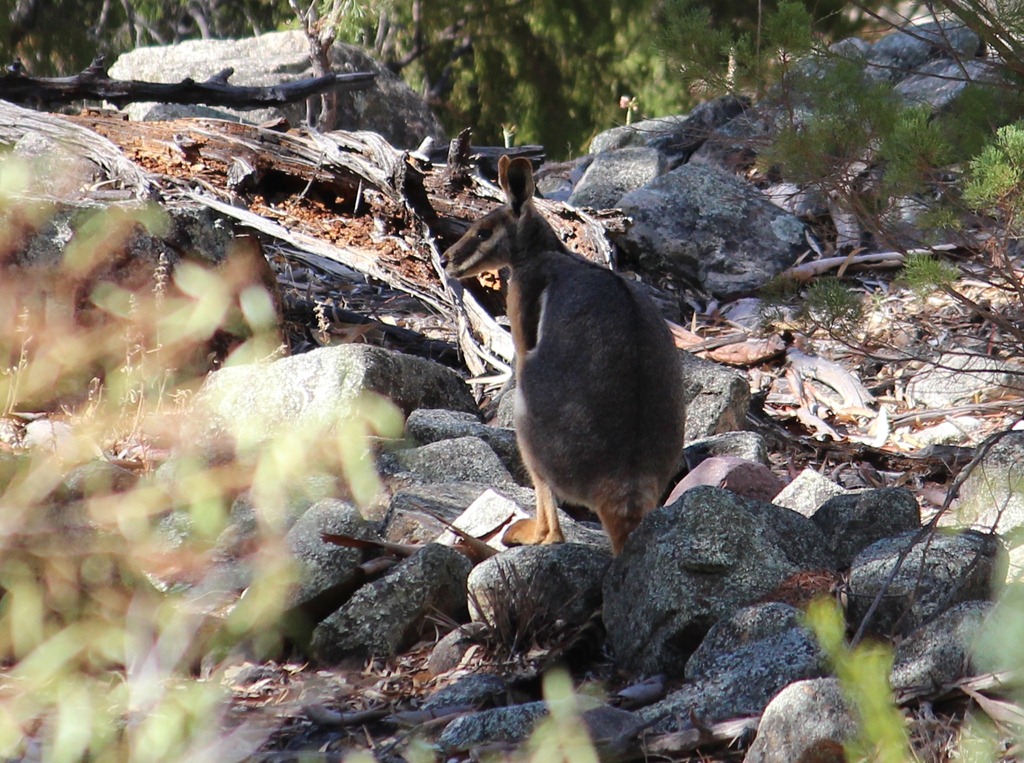
and then we spotted a rarely seen Yellow Footed Rock Wallaby watching us from a safe distance.

IMG_5640

A goanna about 2m long strolled past

P1170440

and had a good look at Matt and Kathrin.

P1170450

Kookaburras watched us from the gumtrees and had a bit of a laugh.

IMG_4339

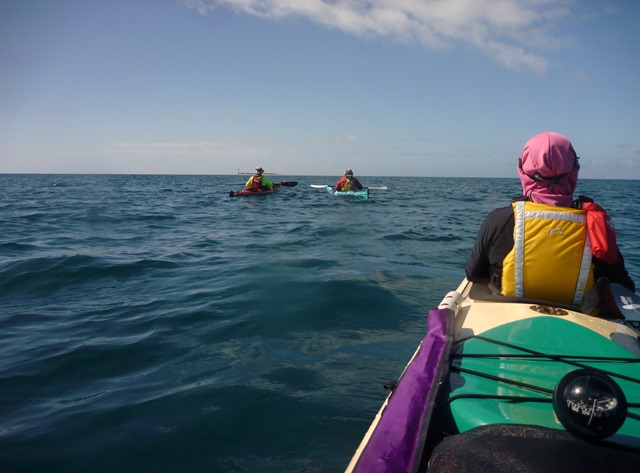
Later we packed up camp, finished our drive to the launching point and prepared the kayaks for a paddle 9km offshore to visit some small rocky islands and the White Rocks Sea Lion colony. As we left the protection of the bay the headwind increased to above 15 knots making for a rather wet paddle.

P1020267

We punched into the head winds for a few kilometres before sheltering from the wind at a low rocky Island. Our efforts were rewarded as we watched the Pelican chicks being fed by their parents, although being downwind from the colony made for an interesting aroma to accompany my energy bar snack.

The colony was quite busy with the Spectacled Pelicans rearing young as well as large numbers of Pied Cormorants nesting nearby.G1

The young chicks were estimated to be around 30-45 days old with their feathers not yet fully developed.G3

Paddling another few kilometres we reached the protected side of the outer islands and hugged the coastline until reaching a remote sheltered bay where we camped for a couple of days.G4

At about his time the Lumix waterproof camera decided to stop working and we discovered that I had left the battery for the spare Canon waterproof in the car. So Matt and Kathrin’s encounter with 30 or so sea lions at White Rocks went unrecorded.

They had paddled out to the Sea Lion colony late in the afternoon and were rewarded by a group of 30 Sea Lions coming into the water to investigate them. They swam and jumped around the kayak, dived under it and generally made friends. The video would have been awesome !!

But we did get some nice photos of Matt’s attempt at hopscotch and the hazy sunset.

G7

G10

Our return journey to the mainland a couple of days later, started soon after dawn to race an approaching weather front. We paddled the last hour of the trip with the wind gusting well over 25 knots beam on, making it quite an interesting paddle. Again I was happy to be paddling the Seaward Passat G3 double which gave us a very controlled and mostly dry ride.

Sea caves and scorpions

We had decided to explore Memory Cove, in the Pt. Lincoln National Park for a few days.  The park, which is one of my favourite parts of South Australia, starts a few kilometres from Pt. Lincoln, is over 70 sq. km in size and includes a number of islands that I have visited by kayak in the past.

The park boasts some spectacular coastal scenery, and features the vast Sleaford-Wanna sand dune system, as well as the offshore islands.  Access to the cove is via a 15km 4WD track and only 5 vehicles are allowed camping access at any one time.

Matt decided to drive the track fearing that I might get us bogged again in sand dunes, however the drive is more rocky than sandy.

memcove 1

We set up camp just metres from the beach and launched the kayaks.

Cove view

After being greeted by the local sea lions we explored the coastline.IMG_0013

P1020142

and found some sea caves to poke around in.

P1020146P1020185

Everywhere is luscious underwater growth with large abalone growing on the rock walls.

underwater

The warm evening was enjoyed along with a few cold beers.

Group1

The next day an approaching storm kept our exploration landlocked.

storm coming

We travelled a sandy 4WD track that hadn’t been used for some time…….

Prado1

and we found out why.

prado2

Matt and Kathrin did some rock climbing and explored a deserted beach. If you look closely you will see them on the beach.

beach2

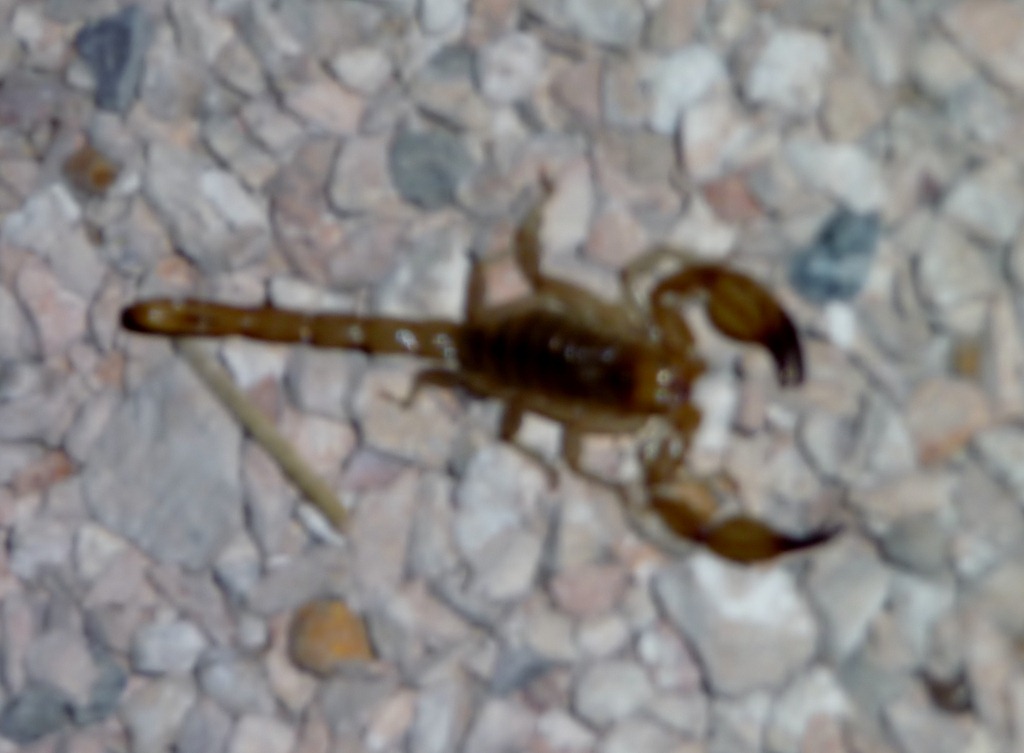
Back at camp that night, while enjoying dinner and a red wine, Matt found a couple of unwelcome visitors heading for his tent. He quickly despatched the Scorpions back to the bush on the end of a shovel.

Scorpion